
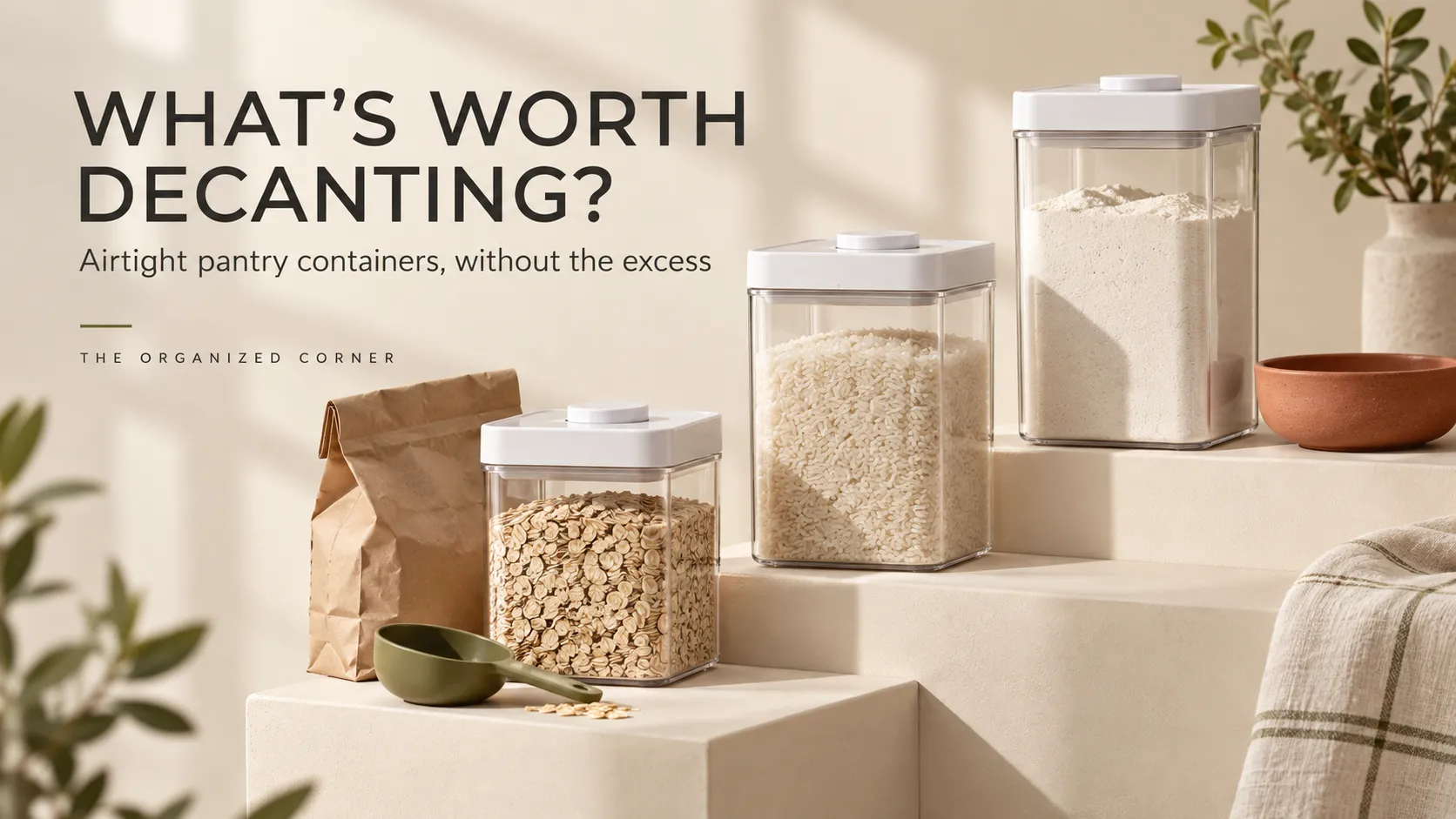
Matching pantry containers look appealing, but transferring every item out of its original packaging isn’t always necessary.
Some foods are easier to identify, scoop and store in airtight containers. Others are perfectly manageable in their original bags or boxes, especially when you use them infrequently.
The trick is knowing what pantry foods to decant before spending money on another set of containers.
You don’t need a completely matching pantry. You need storage that makes everyday cooking easier.
1. Start With the Foods You Use Most Often
The best candidates for decanting are usually dry staples you buy regularly and use frequently.
Consider:
- Rice and oats
- Pasta and dried lentils
- Flour and sugar
- Breakfast cereal
- Dried beans
- Frequently used baking ingredients
These foods can benefit from containers that are easy to open, close and access.
Transparent containers can also help you see how much remains before adding something to your shopping list.
Start with just three to five staples. You can always add more containers later if you discover they genuinely make your routine easier.
2. Know What Can Stay in Its Original Packaging
Not every pantry item needs to be transferred.
Original packaging may be more practical for:
- Individually wrapped snacks
- Foods you buy infrequently
- Small packets and sachets
- Items you’ll use up quickly
- Products with preparation instructions you regularly need
- Foods with important ingredient or allergen information
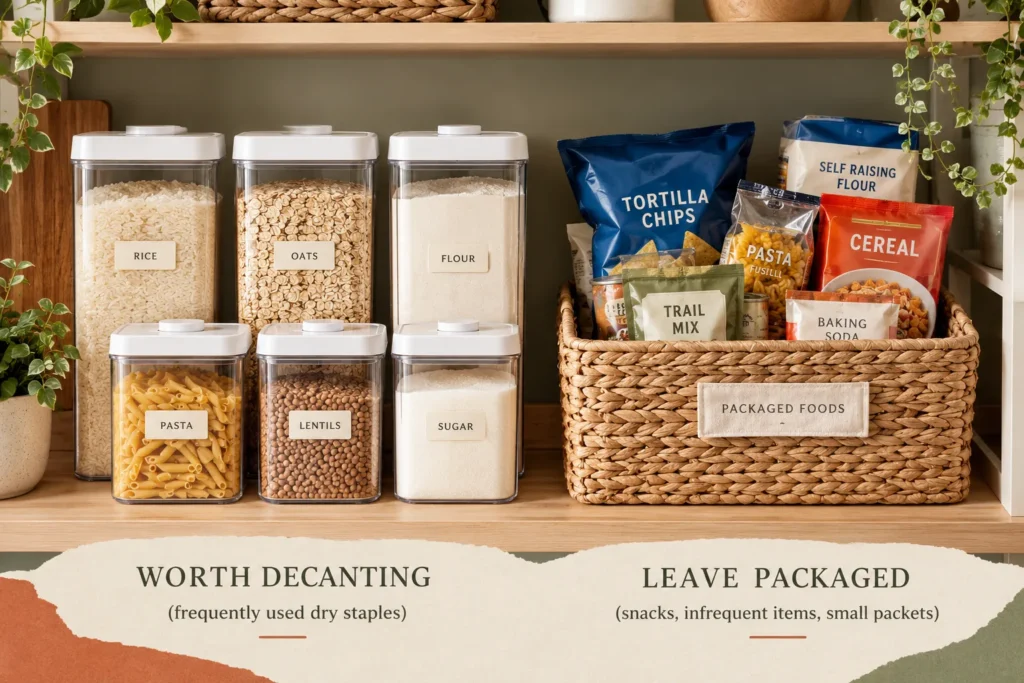
You can keep these products in their original packaging and group them inside a labelled basket.
That still counts as an organized pantry.
Before discarding any packaging, check whether you need its dates, ingredients, allergen information, cooking instructions or storage guidance.
3. Choose Containers That Fit Your Actual Pantry
Before buying a container set, measure the shelf where you plan to use it.
Check the available width, depth and height, especially if the containers will sit beneath cabinets or on a narrow shelf.
Then consider the container itself:
- Airtight closure: useful for protecting suitable dry foods from moisture and air.
- Opening size: wide enough to scoop or pour ingredients comfortably.
- Shape: easy to arrange without wasting shelf space.
- Cleaning: simple to wash and dry thoroughly.
- Visibility: clear enough to identify contents and remaining stock.
Avoid buying a large set before deciding which ingredients will go into it. A container is only useful if it fits your shelf and your everyday routine.
4. Keep Labels Simple and Practical
When you transfer food, label the container with the correct food name.
For example:
RICE · OATS · PASTA · FLOUR
Keep important original information available whenever needed, including relevant dates, ingredients, allergens and storage instructions.
Your existing guide on how to label a pantry explains how to label containers and storage categories without creating unnecessary work. Your separate guide to labelling decanted food covers preserving useful information from the original packaging.
5. Decant Based on Use, Not Appearance
Before transferring an ingredient, ask yourself three questions:
Do I use this regularly?
Will a container make it easier to store or measure?
Will I actually maintain and refill it?
If the answer is yes, decanting may be worthwhile.
If you’re transferring something simply because matching containers look attractive, pause before buying more.
You might find that a labelled basket or neatly arranged original packaging solves the problem just as well.
The goal is to make your pantry more useful—not to create another project you have to maintain.
Keep Your Pantry Practical, Not Perfect
A well-organized pantry doesn’t require dozens of matching jars.
Start with the staples you use most often. Choose containers that fit your shelves, label them clearly and retain the important information from original packaging.
Leave everything else in its original packaging when that’s the more practical option.
If you’re trying to avoid duplicate purchases as well, our pantry inventory system explains how to track what you already have before shopping.
The best container is the one that solves a real storage problem—not another item that takes up space.
Frequently Asked Questions
Which pantry foods should I decant first?
Start with frequently used dry staples such as rice, oats, pasta, flour and sugar. Prioritize foods that benefit from easier access, scooping and storage.
Do all pantry foods need airtight containers?
No. Choose containers where they improve storage and usability. Many packaged foods can stay in their original packaging inside an organized basket.
Should I throw away the original packaging after decanting?
Only after checking whether you still need the original date, ingredients, allergen details, preparation instructions or storage guidance.
How many pantry containers should I buy?
Begin with the staples you regularly use and measure your available shelf space. Add containers gradually instead of buying a large set you may not need.
Join the conversation.