
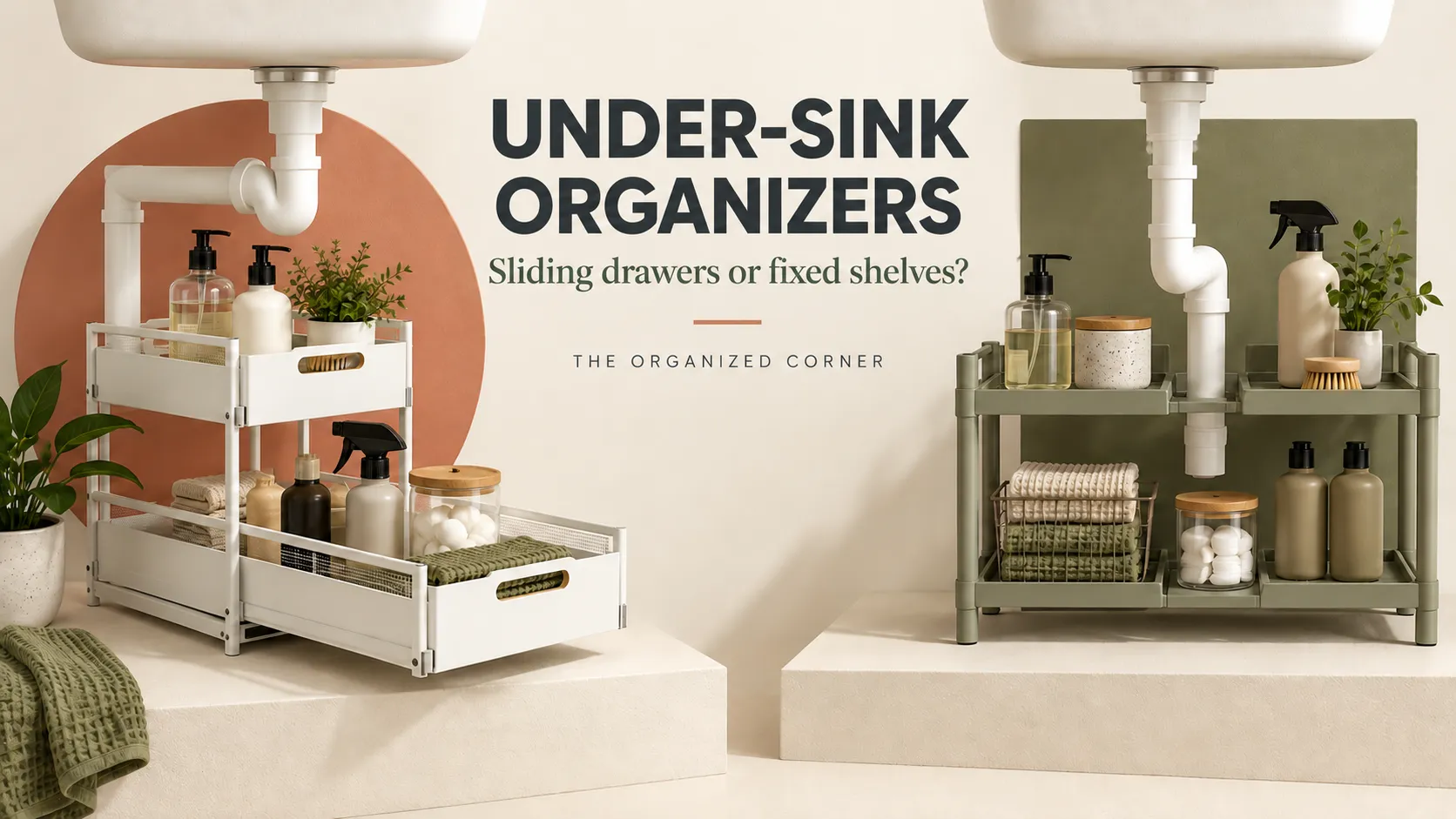
The cabinet beneath a kitchen or bathroom sink can be one of the most awkward places to organize.
Pipes take up valuable space. Cleaning bottles get pushed toward the back. Small supplies disappear behind larger containers, and reaching one item can mean moving everything around it.
An under-sink organizer can make this space easier to use, but choosing the right design matters.
Two common options are sliding drawers and fixed shelves. Both can create useful storage, but they solve slightly different problems.
The better choice depends on your cabinet’s layout, the items you store and how easily you need to reach them.
Which Under-Sink Organizer Is Better?
Choose sliding drawers when you regularly need to reach items at the back and have enough clearance for the drawers to move around the plumbing. Choose fixed shelves when you prefer a simpler arrangement and the cabinet layout allows the items you use to remain accessible.
1. Measure Around the Plumbing Before Choosing
Under-sink storage isn’t like organizing an empty cabinet. You need to work around the actual space available.
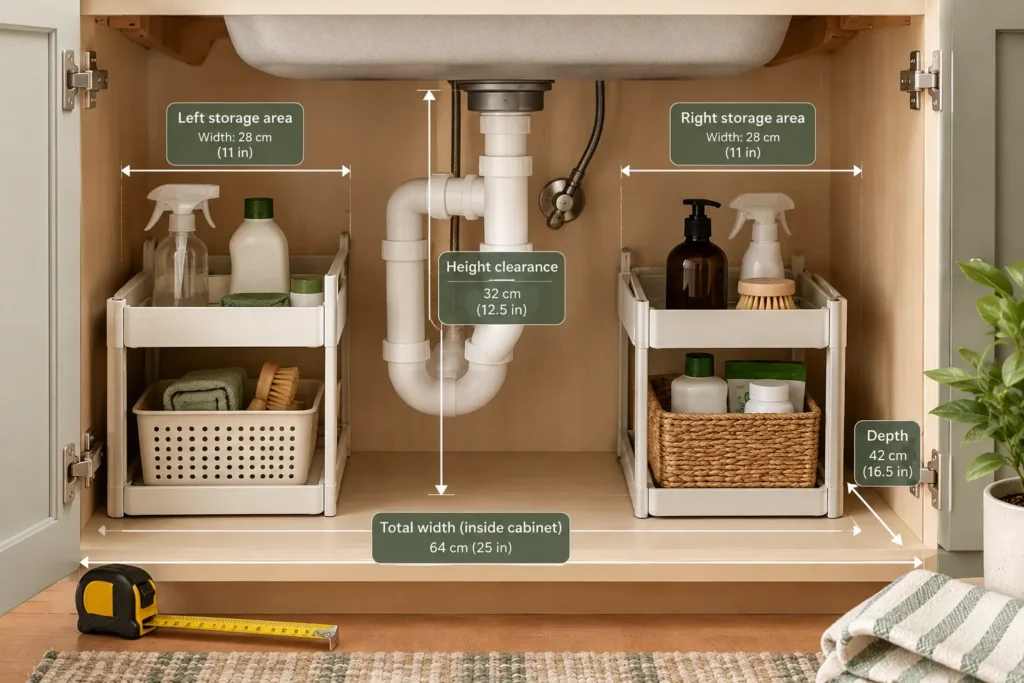
Before purchasing anything, measure:
- Width: the usable space from side to side.
- Depth: the usable distance from front to back.
- Height: the clearance available beneath the sink.
- Obstructions: pipes, valves, hoses, hinges and any other fittings.
Check the cabinet opening too. An organizer might fit inside the cabinet but be difficult to install or pull out through the doors.
Look at the plumbing before deciding where each shelf or drawer should go. Sometimes the most practical solution is to use separate storage areas on either side of a pipe rather than trying to fit one large organizer underneath it.
For a more detailed measuring process, see our guide on how to measure kitchen cabinets for organizers.
2. When Sliding Drawers Make More Sense
Sliding organizers are useful when you regularly need items stored toward the back of the cabinet.
Instead of reaching over the front row of bottles, you pull the drawer toward you and access its contents more easily.
They can work particularly well for:
- cleaning sprays and cloths
- dishwashing supplies
- bathroom toiletries
- smaller household essentials
- products you use frequently
The main advantage is accessibility.
However, sliding drawers need enough room to move without hitting pipes, doors or other fittings. Check the product’s installation requirements and make sure the pull-out mechanism suits your available space.
Also consider the weight of the items you plan to store and follow the manufacturer’s load limits.
3. When Fixed Shelves Are the Better Choice
Fixed shelves offer a simpler approach. They create separate levels of storage without relying on a pull-out mechanism.
They can be useful when you want to group taller bottles on one level and smaller supplies on another, or when you have a straightforward cabinet layout with enough clearance.
Fixed shelves may suit you better when:
- you don’t need frequent access to the back
- the cabinet layout is relatively unobstructed
- you want a simple storage arrangement
- the items fit comfortably on accessible shelves
The limitation is that items at the back may still be harder to reach. If you stack products too deeply, the shelf can become another place where things get forgotten.
Keep frequently used items toward the front and avoid overcrowding each level.
4. Compare Both Designs Before Buying
Use this quick comparison to decide which design better suits your cabinet.
| Consideration | Sliding drawers | Fixed shelves |
|---|---|---|
| Reaching items at the back | Usually easier when fully accessible | May require moving front items |
| Moving parts | Yes | Usually fewer |
| Plumbing clearance | Must allow for drawer movement | Must allow shelf placement |
| Best suited to | Frequently accessed supplies | Clearly grouped, stable storage |
| Main thing to check | Pull-out clearance and load limits | Shelf spacing and accessibility |
Neither design is automatically better.
A sliding organizer can be frustrating if the plumbing prevents the drawer from moving fully. Fixed shelves can be frustrating if the items you need most often end up buried behind everything else.
Choose based on the cabinet you actually have—not just the product photograph.
5. Organize the Contents by Category
Once you’ve selected the storage layout, give each section a clear purpose.
For example:
Daily cleaning: the products you reach for regularly.
Backup supplies: spare sponges, cloths and unopened replacements.
Occasional-use items: products you need less frequently.
Keep commonly used products in the easiest-to-reach location. Store backups farther back or on a less accessible shelf.
Before adding containers, remove empty bottles and products you no longer use. You may discover that a smaller number of supplies makes the available storage work much better.
For more ideas on making a small kitchen easier to use, read our guide to small kitchen organization ideas.
6. Keep the Cabinet Practical and Easy to Maintain
The area beneath a sink can be exposed to drips, spills and moisture, so organization should make it easier to notice and manage problems—not hide them.
Before installing an organizer:
- Check for existing leaks or dampness.
- Keep products upright and securely stored.
- Leave access to plumbing connections.
- Avoid blocking areas that need inspection or maintenance.
- Use suitable cabinet protection where appropriate.
If you store household cleaning products underneath the sink, retain their original containers and labels, follow their storage directions, and keep them safely away from children and pets.
Also consider how easily you can remove the organizer when the cabinet needs cleaning or plumbing work.
Which Under-Sink Organizer Should You Choose?
Choose sliding drawers if easy access to items at the back is your main priority and your cabinet has enough room for the drawers to move.
Choose fixed shelves if your cabinet layout allows straightforward shelf placement and you prefer a simpler arrangement.
Either way, measure first, plan around the plumbing and assign each storage area a clear purpose.
The goal isn’t to fit the maximum number of bottles beneath the sink. It’s to make the items you need easier to find, reach and put away.
Frequently Asked Questions
Are sliding under-sink organizers better than fixed shelves?
Sliding organizers generally make items at the back easier to reach, while fixed shelves offer a simpler layout. The best option depends on your plumbing, available clearance and storage needs.
How do I organize under a sink with pipes in the way?
Measure the usable areas around the plumbing and look for an arrangement that leaves the pipes accessible. You may need separate storage sections rather than one large organizer.
What should I store in an under-sink organizer?
Common options include cleaning supplies, cloths, sponges, dishwashing products and other household essentials appropriate for the location.
What should I measure before buying an under-sink organizer?
Measure the usable width, depth and height, the cabinet opening, and the space occupied by pipes, valves, hinges and other obstructions. For sliding organizers, allow for the movement required to pull them out.

Join the conversation.