
Stacking pans inside a kitchen cabinet seems simple until you need the one at the bottom.
You lift a skillet, move two saucepans and discover that the lid you need has slipped behind everything else.
A pan rack for a kitchen cabinet can make cookware easier to access, but the right choice depends on more than how many pans the rack claims to hold.
Before buying one, check your cabinet dimensions, the size of your cookware and how the rack will work with your everyday cooking routine.
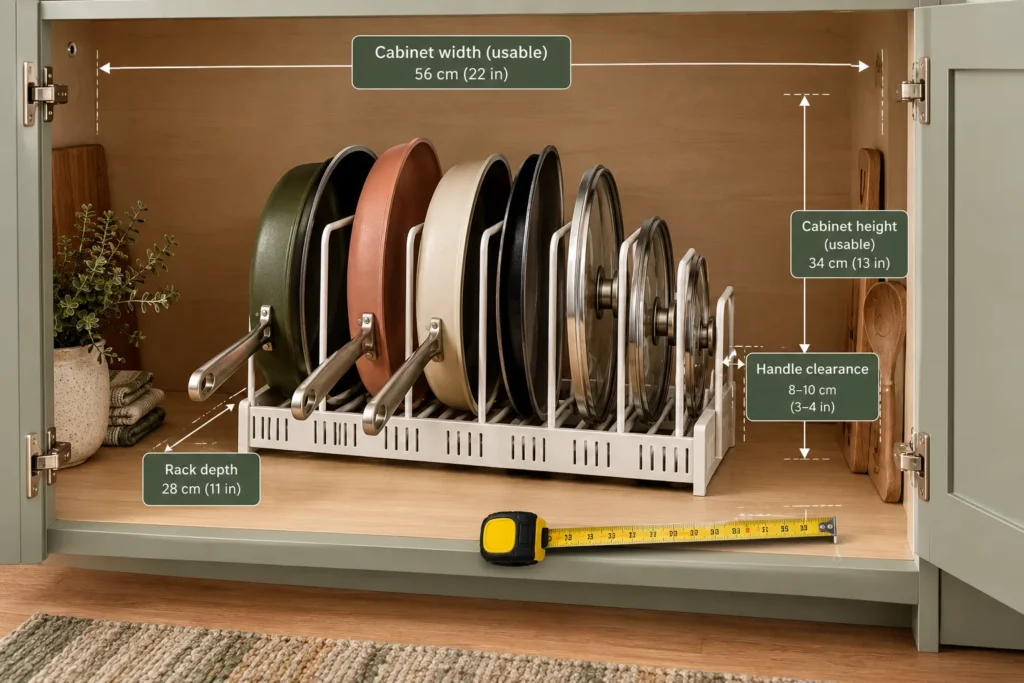
1. Measure the Cabinet’s Usable Space
Start by measuring the cabinet where you plan to put the rack.
Record the usable:
- Width: side to side inside the cabinet.
- Depth: front to back.
- Height: from the cabinet base to the shelf above, if there is one.
Then check the door opening, hinges and any internal supports that may reduce the available space.
Don’t rely on the exterior cabinet dimensions. An organizer needs to fit inside the usable area and remain accessible when the cabinet doors are open.
For a more detailed measuring process, see our guide to how to measure kitchen cabinets for organizers.
2. Measure Your Actual Pans and Lids
Before selecting a rack, gather the cookware you want to store.
Check the diameter of your pans and consider the extra space their handles require. Measure lids separately, particularly if they have large knobs or protruding handles.
Ask yourself:
- Will the pans fit into the available slots?
- Can the handles sit comfortably without colliding?
- Are the lid sections wide enough?
- Will the cabinet still close?
A rack’s advertised capacity isn’t enough if your largest pan or lid doesn’t fit properly.
3. Decide Whether You Need Vertical or Horizontal Storage
Different rack layouts solve different problems.
Vertical storage can make individual pans or lids easier to separate and retrieve, provided the rack supports their shape and weight.
Horizontal storage can be useful for stacking cookware or placing heavier items on a stable base, although items underneath may be harder to reach.
Choose the arrangement that suits the pans you use most often. If you regularly cook with one particular skillet, you shouldn’t have to dismantle the entire stack to retrieve it.
4. Check Stability, Spacing and Weight Support
A rack needs to support your cookware securely.
Look for slots or supports that keep pans from leaning excessively or falling against one another. Check the manufacturer’s stated capacity and installation requirements rather than guessing how much weight the rack can hold.
Also consider spacing. A rack with closely arranged dividers may fit several small pans but struggle with wider skillets or thick handles.
For heavier cookware, make sure the rack is designed for that type of use.
5. Think About How You Cook Every Day
The best cookware arrangement follows your actual routine.
Place frequently used pans where they’re easiest to reach. Store occasional-use pieces farther back or on a less accessible shelf.
If you use several lids regularly, give them a defined location rather than leaving them loose between pans.
You don’t need to store every kitchen item in one rack. Sometimes a dedicated pan rack combined with a separate lid section works better than trying to force everything into one organizer.
6. Make Sure the Rack Doesn’t Create a New Problem
Before buying, consider what happens when you use the rack every day.
Can you remove a pan without knocking over the others? Can you return it to its place easily? Does the rack leave room for other items that must stay in the cabinet?
Avoid overcrowding the space simply because the organizer technically accommodates more cookware.
Your goal is to make cooking easier, not to fit the maximum number of objects into one cabinet.
Our guide to small kitchen organization ideas offers more ways to make limited kitchen storage practical without adding unnecessary organizers.
7. Compare the Product Dimensions Before Ordering
Finally, compare your measurements with the seller’s current product specifications.
Check the rack’s overall width, depth and height, its slot arrangement, installation requirements and any stated weight limits.
Look at the product dimensions rather than relying on photographs, which can make a rack appear smaller or roomier than it really is.
If you’re using the Amazon recommendation below, confirm that the linked listing matches the rack you intend to purchase and that its current dimensions suit your cabinet.
Choose a Pan Rack That Works With Your Cabinet
A useful pan rack should make your cookware easier to see, reach and return to its proper place.
Measure the cabinet, check your pans and lids, choose a practical layout and confirm the rack’s stability before buying.
The right rack is the one that fits your actual cookware and makes everyday cooking less frustrating—not necessarily the one that holds the most pans.
Frequently Asked Questions
How do I choose a pan rack for a kitchen cabinet?
Measure the cabinet's usable width, depth and height, then check those dimensions against the rack and the cookware you plan to store.
Is vertical storage better for pots and pans?
Vertical storage can make individual pans easier to retrieve, while horizontal storage may suit stacking or heavier cookware. The better option depends on the rack's design, your cabinet and the sizes of your pans.
Should I store pan lids separately?
Separate lid storage can make lids easier to identify and retrieve, particularly when they are different sizes. Check that the rack has suitable spacing for their handles and knobs.
What should I check before buying a pan organizer?
Check the cabinet dimensions, rack footprint, pan diameter, handle clearance, stability, load limits and how easily you'll be able to remove cookware.

Join the conversation.