
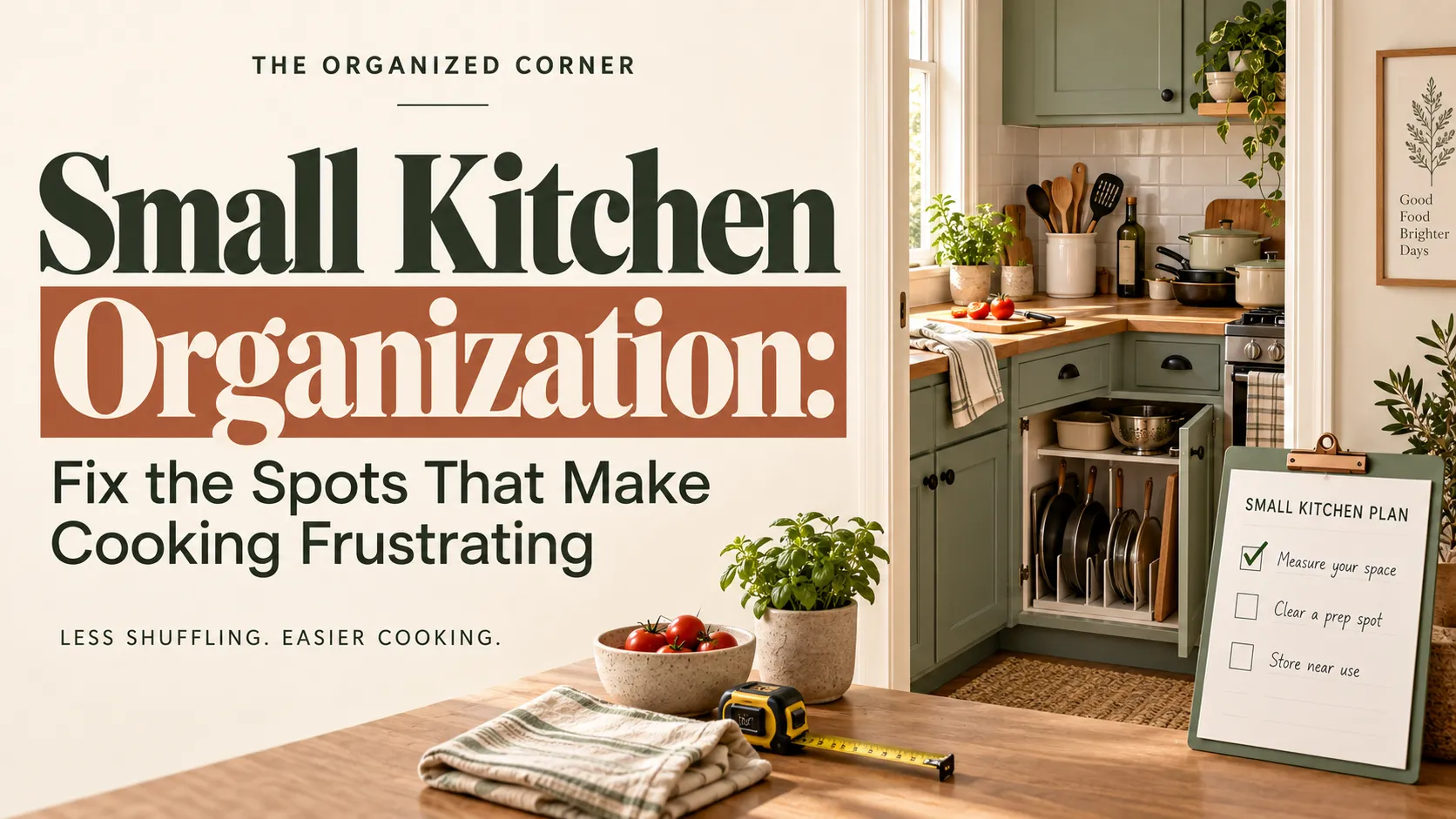
A small kitchen can feel frustrating surprisingly quickly.
One pan blocks another. Utensils disappear into crowded drawers. The counter slowly fills with appliances, bottles and things that don’t have a proper home. Then, when it’s time to cook, you spend more time moving things around than preparing food.
The solution isn’t always adding more storage.
Some of the best small kitchen organization ideas simply make the space you already have work better.
Instead of reorganizing the entire kitchen at once, focus on the few places that regularly slow you down.
1. Start With the Spot You Use Most
Don’t begin with the cupboard you open twice a year.
Start where you prepare food most often.
Look at your main section of countertop and ask:
What is stopping me from using this space comfortably?
It may be a toaster that only gets used on weekends, a collection of cooking oils, mail that has migrated into the kitchen or too many utensils sitting beside the stove.
Clear the surface completely if you can, then return only the things that genuinely need to stay there.
Your goal isn’t an empty kitchen.
It’s creating enough usable space to prepare food without having to move five things first.
If the amount of clutter makes it difficult to know where to begin, our guide on how to start decluttering when overwhelmed can help you choose one manageable area rather than trying to fix everything at once.
2. Store Everyday Items Closest to Where You Use Them
A small kitchen becomes easier to use when items don’t have to travel far.
Think about what happens during an ordinary meal.
If you regularly use a spatula beside the stove, storing it across the room makes little sense. If coffee is prepared in one corner every morning, mugs, coffee and filters should ideally be somewhere nearby.
Try grouping items around the task they support.
For example:
Cooking zone: pots, pans, utensils and frequently used seasonings.
Preparation zone: chopping boards, knives, mixing bowls and measuring tools.
Cleaning zone: dishwashing supplies, cloths and bin liners.
This reduces unnecessary movement and makes it easier to return items when you’re finished.
3. Stop Giving Prime Storage to Rarely Used Items
Not every kitchen item deserves equally convenient storage.
Your easiest-to-reach drawers, shelves and cabinets should generally hold the things you use most often.
That large serving platter used three times a year probably doesn’t need the most accessible cabinet.
The saucepan you use almost every night probably does.
Look at your kitchen storage in three levels:
Prime space: everyday items.
Secondary space: things used weekly or occasionally.
Harder-to-reach space: seasonal, entertaining or rarely used equipment.
This simple change can make a small kitchen feel more spacious without adding a single organizer.
4. Make Drawers Easy to Put Back Together
A kitchen drawer shouldn’t require careful arranging every time you close it.
When drawers constantly become messy again, the problem is often that too many unrelated things are sharing the same space.
Remove everything and group similar items together.
Then ask whether every category really belongs in that drawer.
You may find three bottle openers, duplicate measuring spoons or gadgets you haven’t used in years.
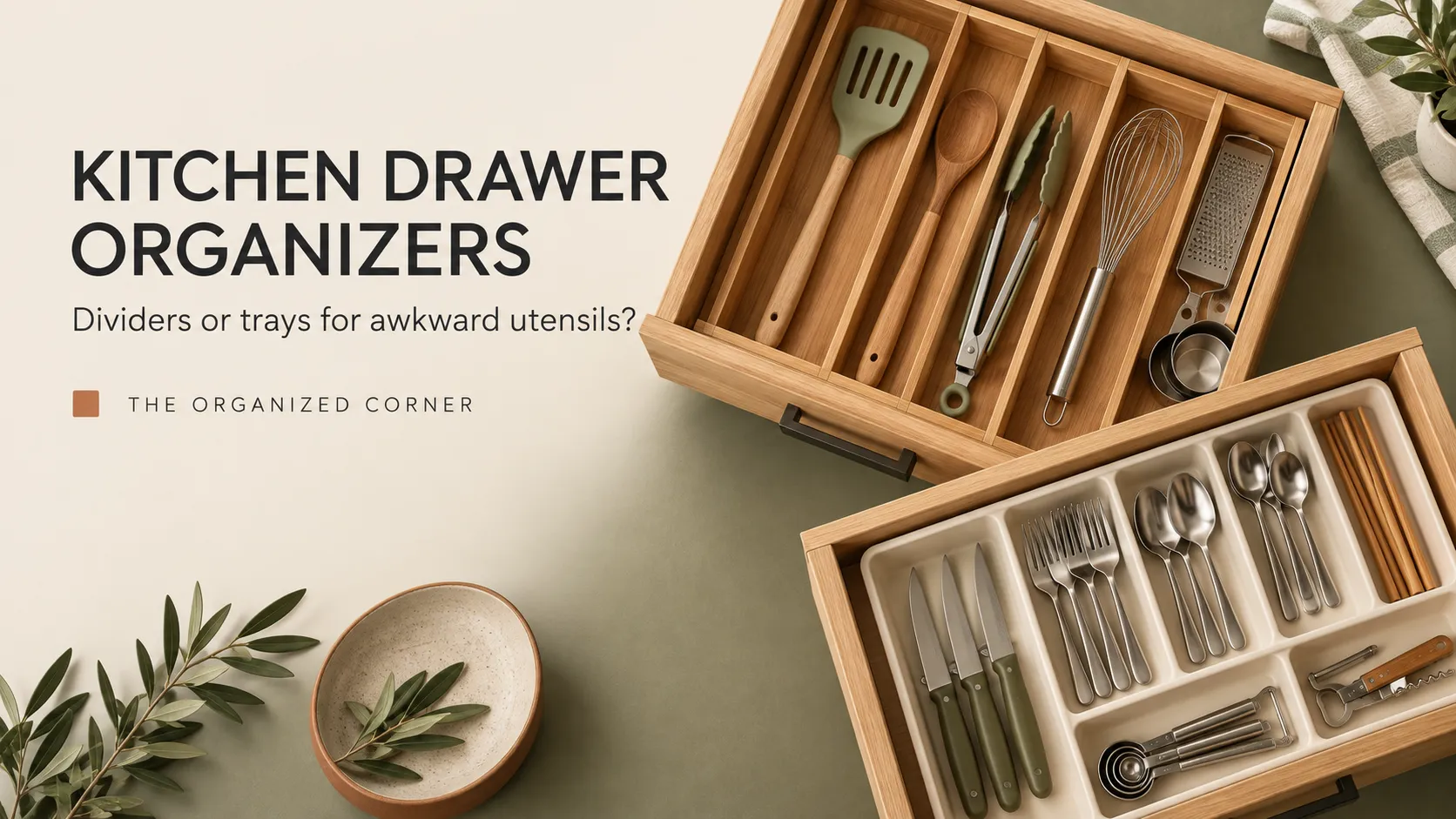
Once you’ve reduced what is stored there, use simple dividers or existing containers only where they make the drawer easier to maintain.
The best drawer system isn’t the one that looks perfect immediately after organizing.
It’s the one you can still reset quickly after a busy week.
5. Use Vertical Space Carefully
Small kitchens often have unused height inside cabinets.
Shelf risers, vertical pan storage and stackable containers can sometimes help you use that space more effectively.
But don’t automatically add another organizer simply because it fits.
First ask:
Will this make the items easier to remove and put back?
Stacking five pans may technically save space, but if you need the bottom one every day, the arrangement will quickly become irritating.
Good small-kitchen storage should reduce effort rather than simply fit more things into the same cabinet.
6. Measure Before Buying Kitchen Organizers
One of the easiest ways to waste money on kitchen organization is buying containers first and measuring later.
Cabinets and drawers aren’t always as usable as their outside dimensions suggest.
Before purchasing anything, measure:
width, depth and height, plus the actual clear opening.
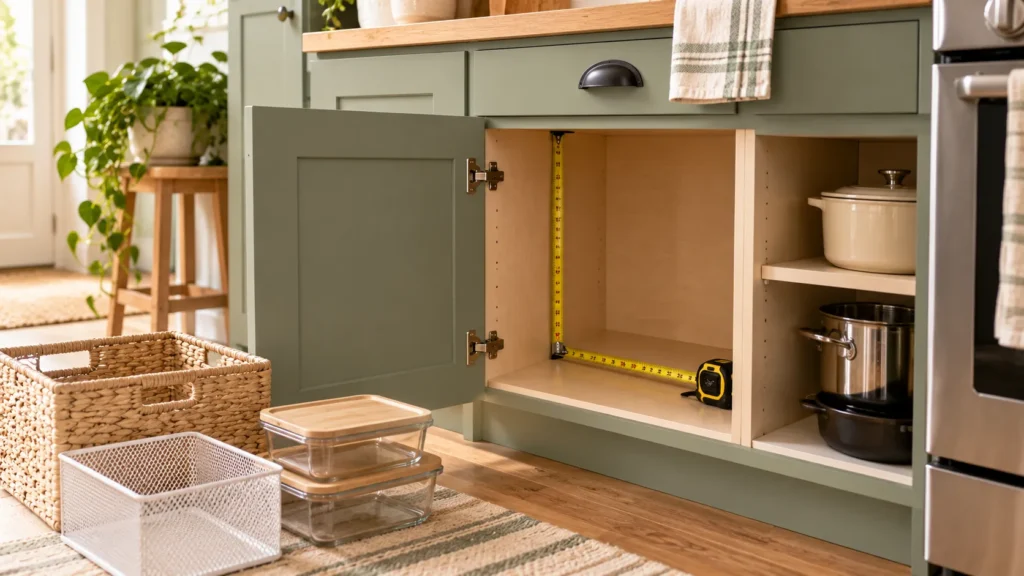
Also check for hinges, pipes, shelf supports and anything else that reduces usable space.
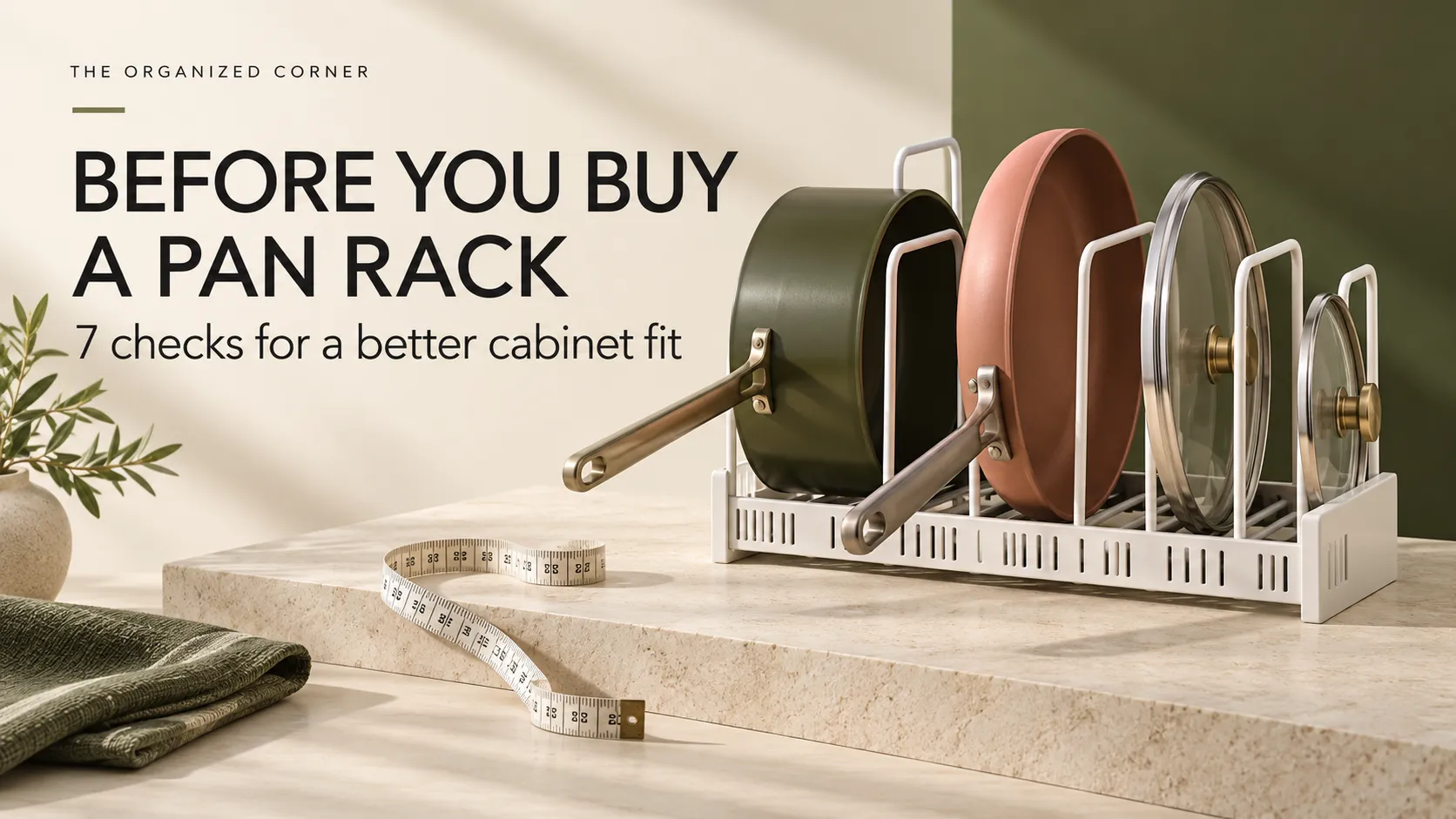
This matters especially with drawer organizers, under-sink storage, pan racks and stackable shelves.
An organizer that is two centimetres too wide isn’t an organization solution.
It’s another thing that needs somewhere to live.
Our Small Kitchen Organization Workbook includes a dedicated measurement and organizer fit-check process so you can plan the space before buying storage products.
7. Test Your New Setup While Cooking
Don’t decide whether your kitchen organization works based only on how it looks.
Cook something.
Make breakfast, prepare dinner or go through whatever routine you normally use the kitchen for.
Notice where you hesitate.
Did you have to cross the kitchen repeatedly?
Was something difficult to reach?
Did one cupboard need to stay open while you worked?
Was the counter still too crowded?
These small frustrations tell you more about your kitchen layout than a perfectly organized photograph ever could.
Adjust the setup until frequently used items are easy to find, use and put away.
A Small Kitchen Doesn’t Need to Feel Difficult
You don’t need to completely redesign your kitchen to make it easier to use.
Start with the problem areas that affect you every day.
Clear one preparation surface.
Move frequently used items closer to where they’re needed.
Give valuable storage to everyday essentials.
Measure before buying organizers.
Then test the changes during real life.
Good kitchen organization isn’t about fitting as much as possible into a small space.
It’s about making the space easier to use.
Frequently Asked Questions
How do I organize a small kitchen with limited storage?
Start by keeping frequently used items in your easiest-to-reach storage, removing things you rarely use from prime areas and grouping everyday items around where they're actually used.
What should I organize first in a small kitchen?
Begin with the area that causes the most frustration during cooking. For many kitchens, that's the main preparation counter, an overcrowded utensil drawer or the cabinet containing everyday pots and pans.
Should I buy kitchen organizers before decluttering?
Usually not. Remove unnecessary items and decide what needs to stay in the space before buying organizers. You'll then know what storage you actually need.
How can I create more counter space in a small kitchen?
Keep only frequently used essentials on the countertop and move occasional appliances or supplies into cabinets or shelves when practical. The goal is to preserve a clear working area for food preparation.
Join the conversation.