
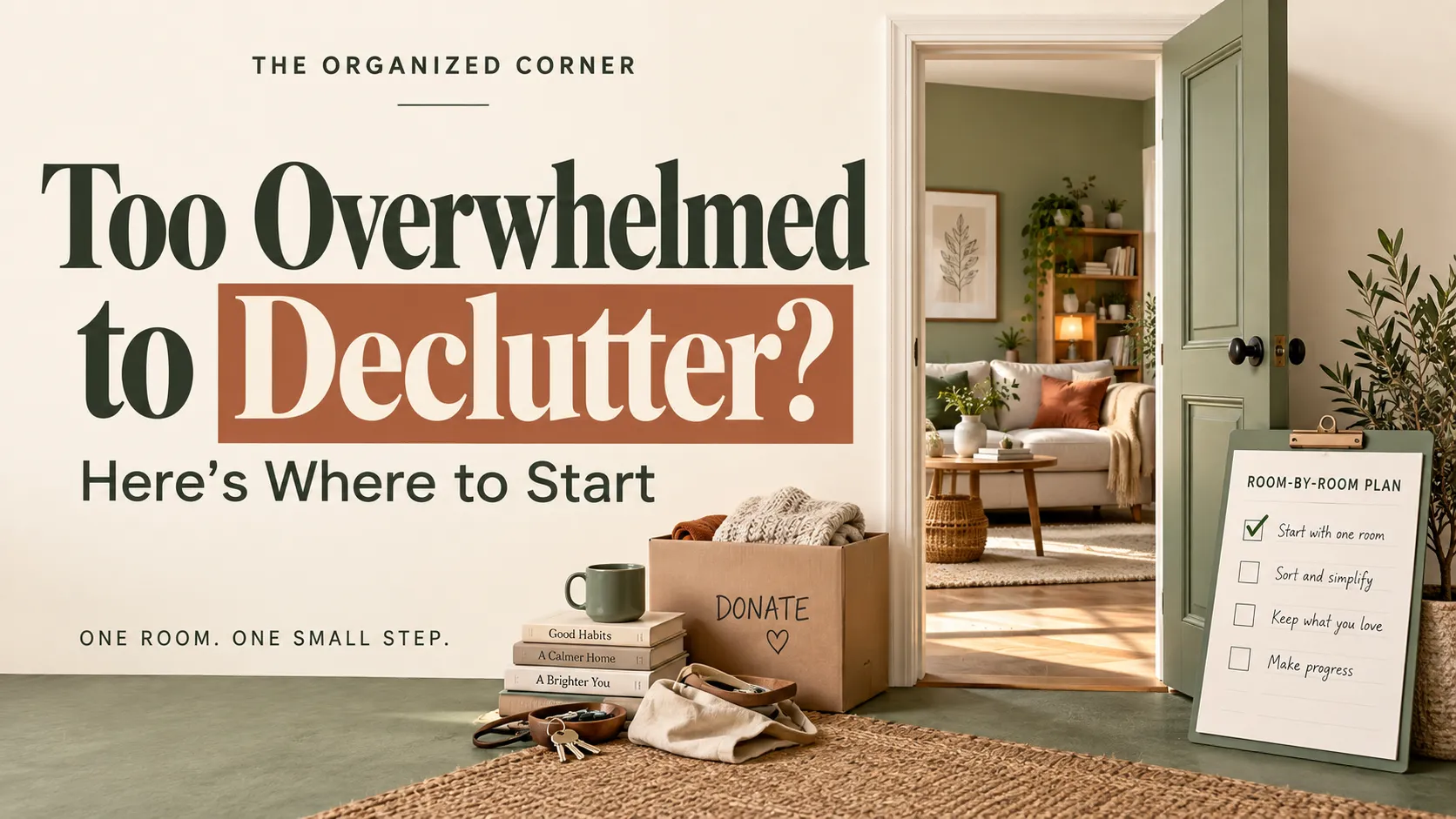
Looking around a cluttered home and deciding to “finally get organized” sounds simple — until you actually have to choose where to begin.
The kitchen counter needs attention. Your closet is overflowing. There are things waiting to be donated, drawers you haven’t opened in months, and piles that somehow keep moving from one room to another.
When everything feels like a priority, it’s easy to do nothing at all.
The good news is that decluttering doesn’t have to start with your entire house. If you’re wondering how to start decluttering when overwhelmed, the best approach is much smaller: choose one manageable space, make a few clear decisions, and build from there.
1. Don’t Start With an Entire Room
One of the easiest ways to make decluttering feel impossible is to begin with something too large.
Instead of telling yourself:
“Today I’m organizing the bedroom.”
Choose something you can realistically finish:
- one nightstand drawer
- one bathroom shelf
- one section of the kitchen counter
- one closet shelf
- one basket
- one small cabinet
Finishing a small space gives you a visible result and, more importantly, somewhere you can completely put back in order before moving on.
Small finished spaces are more useful than five half-finished rooms.
2. Start Somewhere That Bothers You Every Day
You don’t necessarily need to begin with the messiest part of your home.
Start with the clutter that regularly makes your day harder.
Maybe you can’t find what you need in your bathroom drawer each morning. Perhaps the kitchen counter has become a permanent drop zone, or opening your wardrobe means moving three things before reaching the one you want.
Ask yourself:
Which small area would make everyday life easier if it were organized?
Start there.
That immediate improvement can make it much easier to keep going.
3. Use Four Simple Decisions
A big part of decluttering overwhelm comes from making too many decisions.
Simplify the process by putting each item into one of four groups:
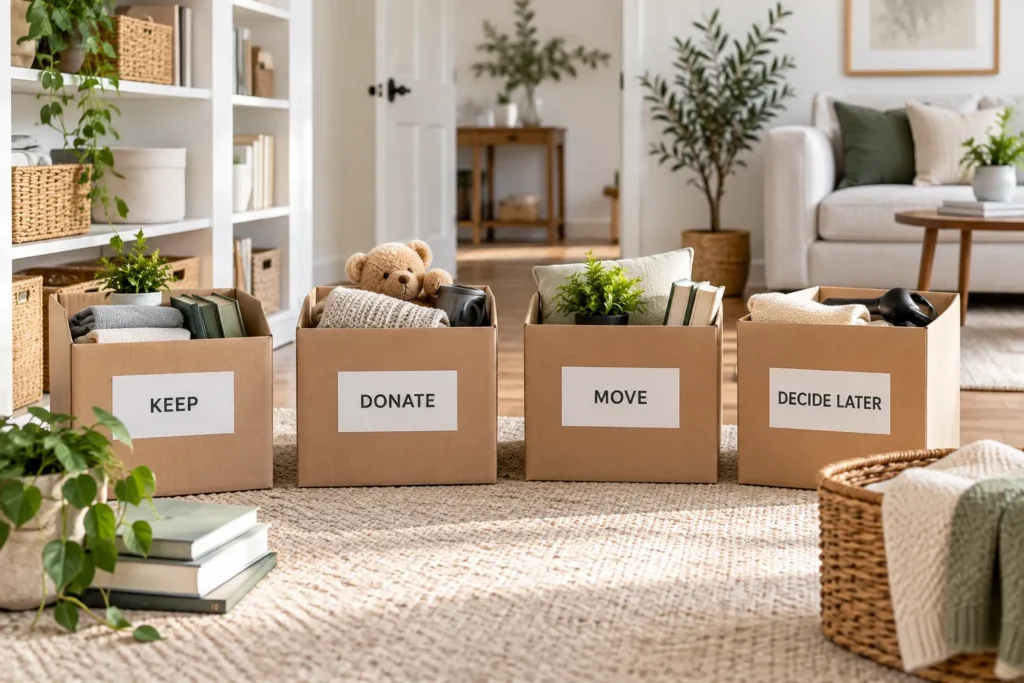
Keep Here
You use it, want it, and this is where it belongs.
Move
You want to keep it, but it belongs somewhere else.
Let Go
It can be donated, sold, recycled, or responsibly discarded.
Decide Later
You’re genuinely unsure and need more time.
The last category should stay small. Otherwise, “decide later” can quickly become another name for clutter.
This is also the decision system used in our Room-by-Room Decluttering Planner, so you can work through each space without having to invent a new organizing method every time. The printable includes individual checklists for kitchens, bathrooms, bedrooms, wardrobes, living areas and entrances, plus a donation/removal tracker.
4. Remove the Easy Things First
You don’t need to begin by deciding whether to keep sentimental belongings you’ve owned for twenty years.
Start with the obvious things.
Look for:
- rubbish
- empty packaging
- expired products
- damaged items you won’t repair
- obvious duplicates
- things that belong in another room
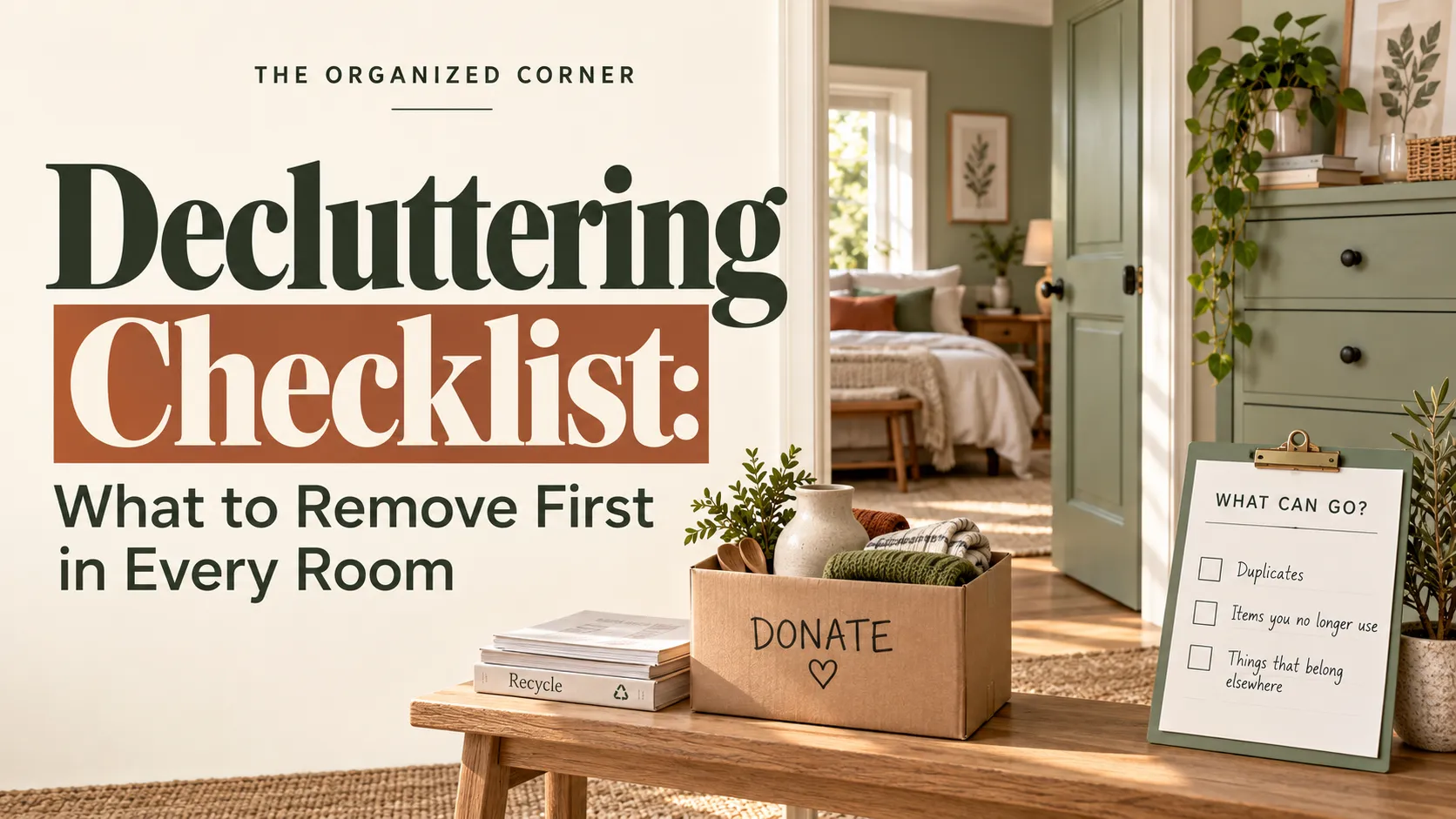
- items you’ve already decided to donate
These decisions require very little mental energy and can quickly create some breathing room.
Once the obvious clutter is gone, the rest of the space usually becomes much easier to evaluate.
5. Give Yourself a Short Decluttering Session
You don’t need an entire free Saturday.
Try setting aside 15–30 minutes.
Choose one small area and stop when your time is up.
A short session might look like:
5 minutes: remove rubbish and obvious items
10 minutes: sort what remains
5 minutes: return the things you’re keeping
5 minutes: move donations or unwanted items toward the door
You can always continue if you have the energy.
But knowing you’re allowed to stop makes starting much easier.
6. Don’t Organize Things You Don’t Need
Storage containers can be useful, but they shouldn’t be the first step.
Buying more baskets, bins and drawer organizers before decluttering often means you’re simply finding better-looking ways to store things you don’t actually need.
First decide:
Do I want this?
Do I use this?
Does it belong here?
Then organize what remains.
You’ll have a much better idea of what kind of storage you actually need — and you may discover you don’t need to buy anything at all.
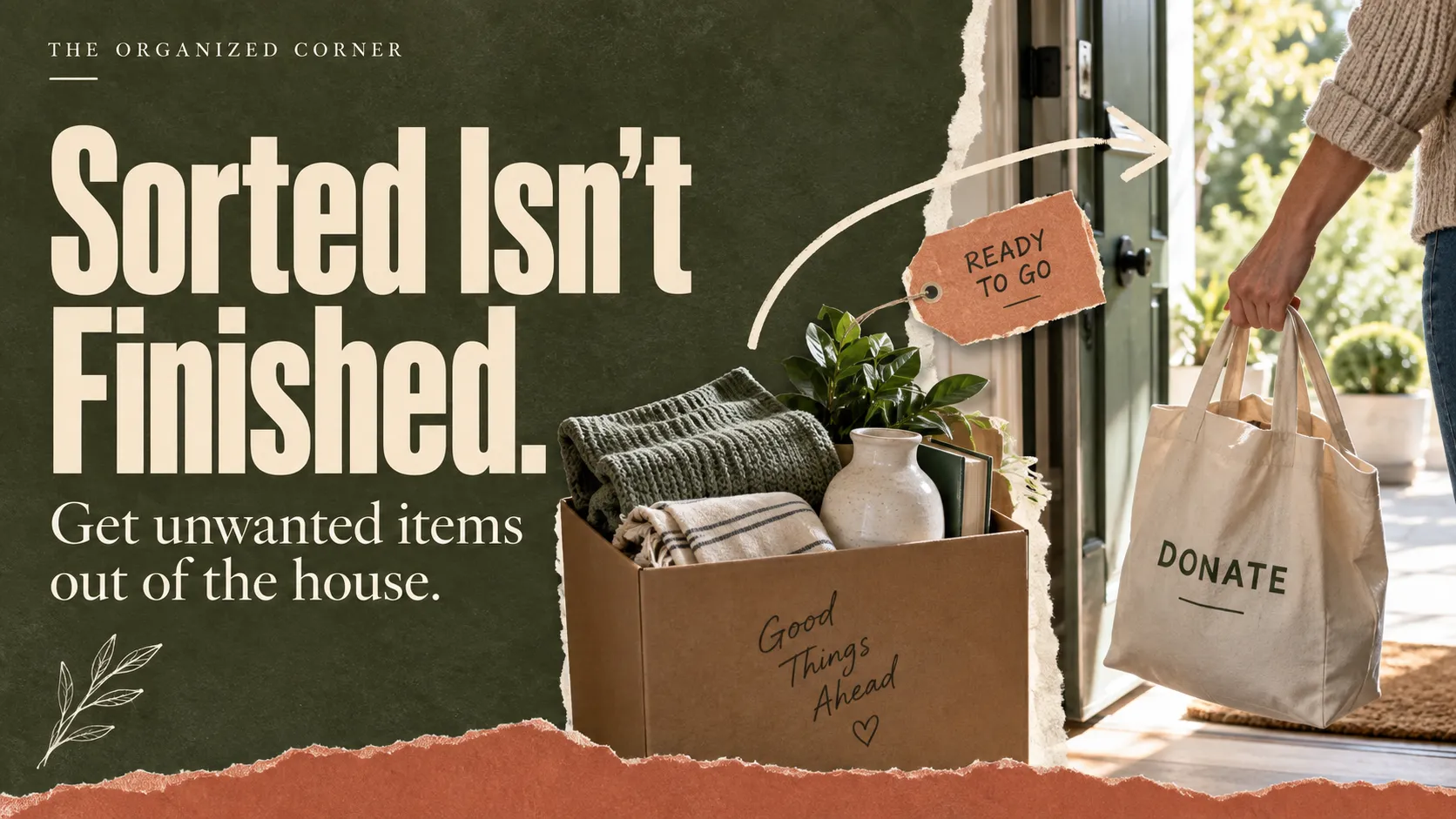
7. Make Sure the Clutter Actually Leaves
A bag labeled “donate” sitting in the hallway for three months is still clutter.
Finish the process.
Create a simple next step for anything leaving your home:
Donate: choose where and when.
Sell: set a date to list it.
Recycle: move it to the appropriate collection point.
Dispose: place it where it will actually leave the house.
If you’re selling something, consider giving yourself a deadline. If it hasn’t sold by that date, decide whether lowering the price or donating it would be more worthwhile.
How to Keep Decluttering Without Feeling Overwhelmed
A calmer home isn’t created in one enormous organizing session.
It’s usually the result of many small decisions:
One drawer finished.
One shelf cleared.
One donation bag removed.
One surface made easier to use.
If you’re overwhelmed by clutter, don’t ask:
“How am I going to organize this entire house?”
Ask:
“What’s one small area I can finish today?”
Start there.
Frequently Asked Questions
Where should I start decluttering when I'm overwhelmed?
Start with one small, visible area that you can completely finish, such as a drawer, shelf or section of a countertop. Avoid beginning with an entire room.
How long should I declutter each day?
Even 15–30 minutes can be enough. Short sessions are often easier to maintain than trying to declutter your entire home in one weekend.
Should I buy organizers before decluttering?
Usually, no. Declutter first so you know exactly what you're keeping and how much storage you actually need.
What room should I declutter first?
Choose the room or small area that causes the most daily inconvenience. Improving a frequently used space can give you an immediate benefit and motivation to continue.
What is the easiest way to start decluttering when overwhelmed?
Choose one small area you can completely finish, such as a drawer, shelf or section of a countertop. Remove obvious rubbish and unwanted items first, then decide what to keep, move or donate before organizing what remains.
Join the conversation.