
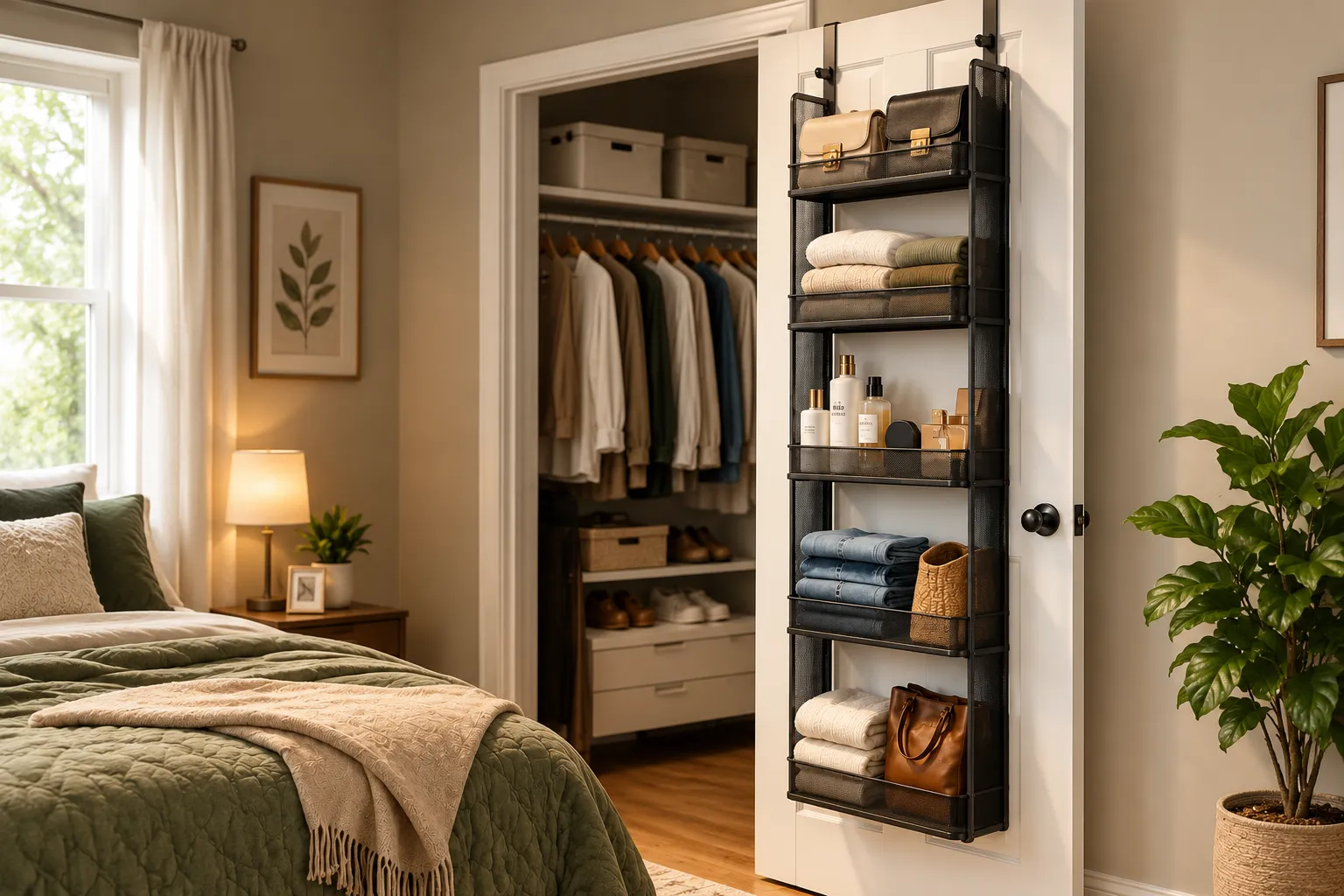
A small bedroom does not always need more furniture.
Sometimes, the better solution is to make better use of the space you already have.
One of the most overlooked areas in a bedroom is the back of the door.
It is usually left completely empty, even though it can provide valuable vertical storage without taking up additional floor space.
An over-the-door organizer can turn that unused area into a practical place for clothes, handbags, toiletries, accessories, folded items, and other everyday essentials.
For anyone looking for small bedroom storage ideas, this can be one of the simplest ways to create more usable storage without adding another dresser or shelving unit.
Why Small Bedrooms Feel Cluttered So Quickly
Small bedrooms usually have limited surfaces.
A dresser fills up.
The nightstand becomes crowded.
Chairs slowly become temporary clothing storage.
Closet shelves become overloaded.
Eventually, items start collecting on the floor because there simply is not an obvious place to put them.
The problem is not always how much you own.
Sometimes it is how the available space is being used.
Bedrooms have a lot of vertical space that often goes unused, including walls, closet doors, and the backs of bedroom doors.
Using those areas can reduce pressure on your existing furniture.
Before adding more storage, it can also help to reduce what you’re trying to organize. If the process feels difficult to start, this guide on how to start decluttering when overwhelmed breaks it into smaller, manageable steps.
Why the Back of a Door Is Useful Storage Space
The back of a door gives you something especially valuable in a small room:
storage without using floor space.
Instead of adding another cabinet or basket, you use an area that already exists.
An over-the-door organizer can create several separate storage sections while keeping everything easy to reach.
This is particularly useful for bedrooms where space between the bed, dresser, and closet is already limited.
The organizer remains attached to the door, so you can still use the rest of the room normally.
How an Over-the-Door Organizer Helps With Bedroom Organization
An organizer such as the JARLINK Over-the-Door Organizer can provide several storage areas in one vertical structure.
Instead of allowing small items to collect across multiple surfaces, you can give them a dedicated home.
Depending on your needs, you might use it for:
- Folded clothing
- Handbags
- Small purses
- Scarves
- Accessories
- Toiletries
- Skincare items
- Hair products
- Towels
- Shoes or slippers
- Small baskets
- Everyday essentials
The goal is not simply to store more things.
The goal is to move frequently used items into a location where they remain visible, organized, and easy to return after use.
Use Vertical Storage Instead of Adding More Furniture
When a room feels crowded, many people immediately think they need another dresser, shelf, or storage cabinet.
That can actually make the room feel smaller.
Vertical storage works differently.
It allows you to increase storage capacity while using very little or no additional floor area.
The back of a door is especially useful because the door itself is already part of the room.
You are simply making that existing surface work harder.
For very small bedrooms, apartments, dorm rooms, and guest rooms, this can be much more practical than adding another piece of furniture.
Create Storage Zones Instead of One Large Pile
Organization becomes easier when items are separated by purpose.
Instead of placing everything into one large basket, use different sections of the organizer for different categories.
For example:
Top Section
Use the upper area for lighter or less frequently used items such as small handbags or accessories.
Middle Sections
Keep everyday items at eye level.
This could include folded clothing, toiletries, hair products, skincare, or frequently used accessories.
Lower Sections
Store heavier or larger items lower down.
Folded jeans, towels, baskets, or other bulkier essentials may work well here.
Creating these zones makes it easier to remember where everything belongs.
A Good Option for Handbag Storage
Handbags can take up a surprising amount of closet space.
If they are stacked together, smaller bags can disappear underneath larger ones.
An over-the-door organizer can give handbags their own visible storage area.
This makes it easier to see different options while keeping them off the floor and away from crowded dresser surfaces.
You can also use smaller baskets within the organizer to hold wallets, pouches, or accessories that you often use with your bags.
Use It for Folded Clothes
Not every clothing item needs to be hung inside a closet.
Sweaters, jeans, leggings, pajamas, and casual clothing can often be folded.
An over-the-door system can provide additional folded storage when dresser drawers or closet shelves are already full.
This can be particularly useful for items you wear frequently.
Instead of digging through a deep drawer, you can keep a few everyday pieces visible and accessible.
Create a Small Beauty or Toiletry Station
If your bathroom has limited storage, your bedroom door can also become an extension of your vanity area.
Use separate sections for skincare, hair products, brushes, grooming tools, and toiletries.
Keeping similar items together reduces clutter around the bathroom sink or bedroom dresser.
However, avoid overloading the organizer with heavy bottles unless the manufacturer specifically states that the organizer and door can safely support the weight.
Great for Closet Organization Too
The same organizer does not necessarily have to be used on a bedroom door.
Depending on the design of your closet, it may work on the inside or outside of a closet door.
This can help keep smaller items from getting lost among hanging clothes and shelves.
For example, use it for:
- Scarves
- Belts
- Small handbags
- Accessories
- Folded clothing
- Shoes
- Seasonal items
- Small storage baskets
It can effectively add another vertical storage zone to the closet.
Small Bedroom Organization Works Best When Surfaces Stay Clear
One of the easiest ways to make a bedroom feel calmer is to keep large surfaces relatively clear.
That includes:
- The dresser top
- Nightstands
- Desk surfaces
- Chairs
- The floor
When every flat surface becomes storage, the room can feel crowded even if everything technically has a place.
Moving some items behind the door creates storage while keeping those visible surfaces cleaner.
That visual difference can make a small bedroom feel noticeably more organized.
Keeping those surfaces clear becomes much easier when it is part of a regular routine. Our weekly cleaning routine shows how short daily resets can prevent clutter from gradually building up again.
Measure Your Door Before Buying an Organizer
Before ordering any over-the-door storage system, measure your door.
Check:
- Door width
- Door height
- Door thickness
- Space between the top of the door and the frame
- Available clearance when the door opens
- Distance between the door and nearby furniture
Also consider whether the organizer will interfere with the door handle, wall, or surrounding furniture.
A storage solution is only useful if the door can still open and close comfortably.
Be Careful Not to Overload the Door
Vertical storage is convenient, but more storage capacity does not mean every section needs to be completely full.
Too much weight can make the organizer harder to use and may put unnecessary pressure on the hooks or door.
Keep heavier items lower when possible and distribute weight evenly.
Follow the manufacturer’s recommended weight limits and installation instructions.
What Should You Store Behind the Door?
The best items are usually things you use regularly but do not want sitting out.
Good candidates include:
- Folded sweaters
- Jeans
- Handbags
- Everyday accessories
- Scarves
- Beauty products
- Toiletries
- Towels
- Small baskets
- Hair tools
- Seasonal accessories
Avoid turning the organizer into another miscellaneous clutter zone.
Give each shelf or section a specific purpose.
Over-the-Door Storage for Renters
Renters often need organization ideas that do not require permanent changes.
Installing wall-mounted shelving may involve drilling holes or adding hardware.
An over-the-door organizer can be much easier because many designs simply hook over the top of the door.
That makes the system easier to remove or reposition later.
Always check that the hardware is compatible with your specific door before installation.
Is an Over-the-Door Organizer Worth It?
For small bedrooms, it can be an effective way to increase storage without increasing the amount of furniture in the room.
The biggest advantage is that it uses space that might otherwise remain completely unused.
A product such as the JARLINK Over-the-Door Organizer may be worth considering if you regularly struggle with crowded closet shelves, dresser tops, handbags, clothing, or toiletries.
The key is to use it intentionally.
Instead of filling every compartment randomly, create categories and give each type of item a permanent place.
Small Bedroom Storage Does Not Have to Be Complicated
You do not necessarily need an expensive closet renovation to make a bedroom easier to organize.
Sometimes the biggest improvements come from noticing the spaces you already have.
The back of your bedroom door is one of those spaces.
With a simple over-the-door organizer, you can create storage for clothes, bags, toiletries, and everyday essentials while keeping more of your floor and furniture surfaces clear.
For a small bedroom, that can make a meaningful difference.
The room gets more storage without actually becoming more crowded.
Frequently Asked Questions About Over-the-Door Storage
Are Over-the-Door Organizers Good for Small Bedrooms?
Yes. They can provide extra vertical storage without using additional floor space, making them particularly useful in small bedrooms, apartments, and dorm rooms.
What Can I Store in an Over-the-Door Organizer?
Depending on the organizer’s design and weight capacity, you may be able to store folded clothing, handbags, accessories, toiletries, towels, beauty products, shoes, and small household essentials.
Do Over-the-Door Organizers Damage Doors?
Many are designed to hook over the top of a door without permanent installation. However, compatibility varies, so check the product instructions and make sure the hooks do not interfere with the door frame or finish.
Can I Use an Over-the-Door Organizer on a Closet Door?
Potentially, yes. It depends on the door design, thickness, clearance, and organizer dimensions.
Should Heavy Items Go at the Top or Bottom?
Heavier items are generally better positioned lower when possible because this can help distribute weight more safely and keep the organizer stable.
Join the conversation.