
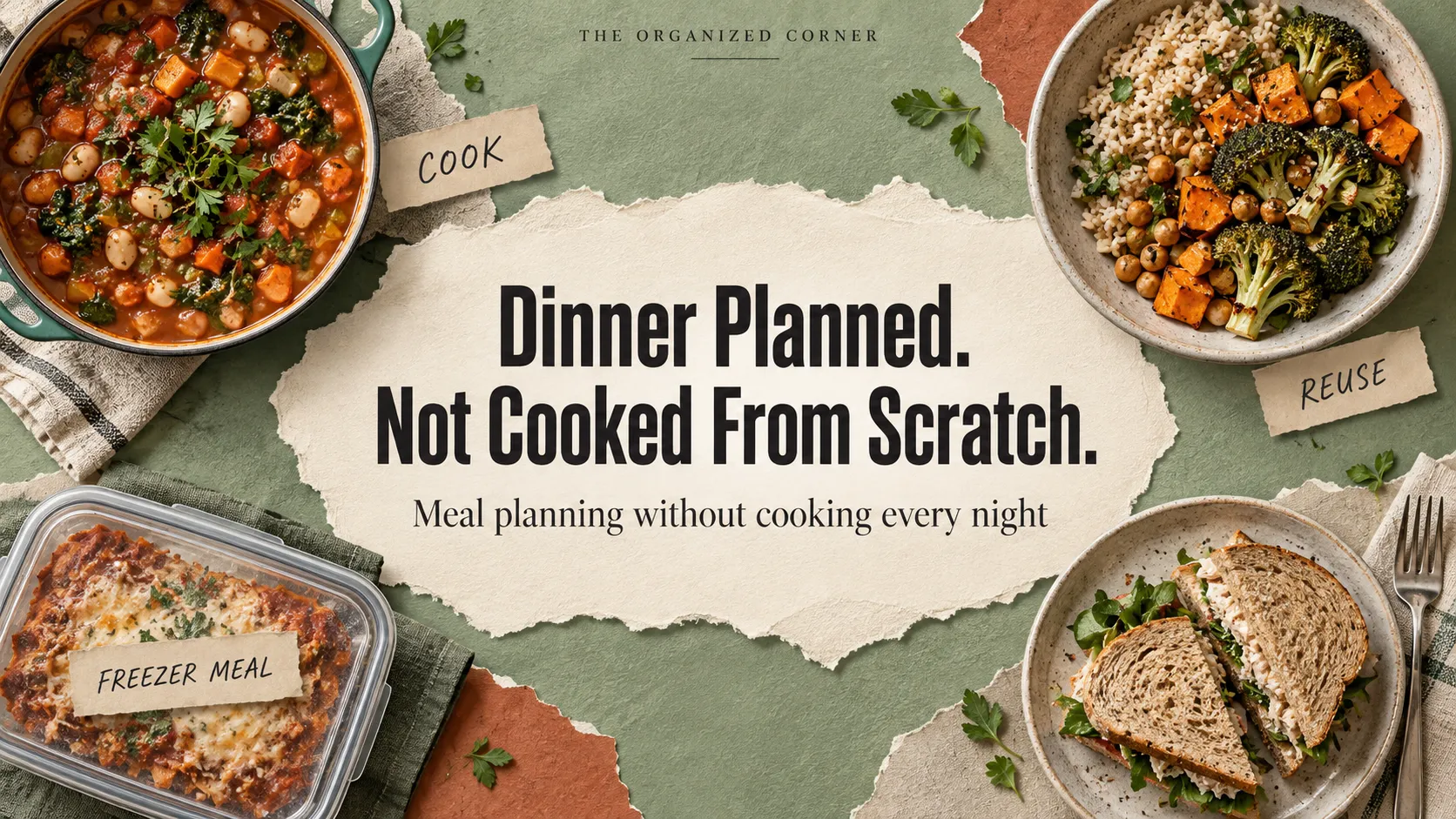
Meal planning is supposed to make dinner easier.
But if your plan expects you to cook a completely different meal from scratch every night, it can quickly become another job.
Busy evenings don’t always leave time for chopping, cooking and cleaning up from a full dinner.
That’s why meal planning for busy weeknights works better when you plan different types of dinners—not seven separate cooking sessions.
- Some nights you cook.
- Some nights you reuse.
- Some nights you heat something from the freezer.
- Some nights dinner is simply assembled.
The goal is to know what’s happening before everyone is hungry.
How Do You Meal Plan for Busy Weeknights?
Start by deciding how many nights you realistically want to cook, then build the rest of the week around leftovers, freezer meals, quick assembly dinners and one or two flexible backup options. Match your easiest meals to your busiest nights, use food you already have, and avoid planning seven completely different dinners.
If you’re looking for the complete process from checking your schedule and pantry to building a grocery list start with our weekly meal planning guide. This guide focuses specifically on making busy weeknight dinners easier without cooking from scratch every night.
1. Don’t Plan Seven Different Weeknight Dinners
You do not need seven original meals every week.
That usually creates:
- more ingredients
- more shopping
- more preparation
- more leftovers
- more cleanup
Instead, plan around fewer main cooking sessions.
For example:
Monday: cook
Tuesday: reuse leftovers
Wednesday: quick meal
Thursday: cook
Friday: freezer meal
Saturday: flexible
Sunday: cook or family meal
You still have dinner every night.
You’re simply not starting from zero every time.
2. Cook Once and Give the Food a Second Job
When you’re already cooking, consider whether part of the meal can help with another dinner.

For example:
Roast chicken
Dinner one: chicken with vegetables
Dinner two: wraps, salad or sandwiches
Cooked rice
Dinner one: rice bowl
Dinner two: fried rice
Tomato sauce
Dinner one: pasta
Dinner two: baked pasta or pizza base
Roasted vegetables
Dinner one: side dish
Dinner two: grain bowl or wrap filling
This isn’t complicated meal prep.
You’re simply cooking enough of one useful component to make a later meal easier.
3. Plan One Leftover Night on Purpose
Leftovers work much better when they’re part of the plan.
Instead of thinking:
Maybe we’ll eat leftovers someday.
assign them a night.
For example:
Wednesday — leftover night
That gives the food a clear purpose and removes one meal from your cooking schedule.
It also helps you avoid making another dinner while perfectly good food is already waiting in the fridge.
4. Keep One Freezer Meal Ready
Your freezer can be one of the easiest ways to reduce weeknight cooking.
Keep one or two useful options available such as:
- soup
- chilli
- curry
- pasta bake
- cooked rice
- frozen vegetables
- prepared portions of a meal
The important part is being able to find them.
If your freezer is full but you still can’t see what can become dinner, these freezer organization ideas can help you group meals, track what you have and create a visible use-first section.
5. Use “Assemble” Meals on Your Busiest Night
Not every dinner needs to be cooked.
Some meals can simply be assembled.
Examples include:
- sandwiches and salad
- wraps
- grain bowls
- soup and bread
- rotisserie chicken with simple sides
- hummus, vegetables and flatbread
- leftovers combined into a bowl
These meals are especially useful on evenings when you already know time will be limited.
Look at your schedule before planning meals so your easiest dinner lands on your busiest night.
6. Build Meals Around Food You Already Have
Before deciding what to cook, check:
- fridge
- freezer
- pantry
- cupboards
If you already have rice, beans and vegetables, you may only need one additional ingredient.
If there is soup in the freezer, one dinner may already be solved.
This is also where a pantry inventory system can help, because knowing what you already have makes it easier to build dinners without buying another full set of ingredients.
7. Choose a Few Reliable Backup Meals
Plans change.
A meeting runs late.
Someone needs to go somewhere unexpectedly.
You don’t feel like cooking what you originally planned.
Keep two or three backup meals available.
Good backup options are:
- quick pasta
- eggs and toast
- soup and sandwiches
- frozen meals
- quesadillas
- simple rice bowls
They don’t need to be exciting.
They need to stop a changed plan from becoming a stressful dinner decision.
Your broader weekly meal planning guide also covers keeping backup meals and choosing only the meals that genuinely need planning. The Organized Corner
8. Plan Components, Not Just Complete Meals
You can make weeknights easier by preparing a few building blocks.
That might mean:
- cooked rice
- chopped vegetables
- washed salad greens
- a protein
- one sauce
- cooked grains
Then combine those pieces differently.
For example:
Monday: chicken + rice + vegetables
Tuesday: chicken wraps
Wednesday: vegetable rice bowl
Same ingredients.
Different dinner.
Less work.
9. Make Convenience Part of the Plan
Convenience food is not a failed meal plan.
Sometimes your realistic week includes:
- frozen vegetables
- jarred sauce
- pre-cut ingredients
- ready-cooked grains
- prepared soup
- rotisserie chicken
If those foods help you create dinner instead of abandoning the plan entirely, they are serving a useful purpose.
Meal planning should make life easier—not prove how much you can cook from scratch.
10. Write the Plan Based on How Much Cooking You Want to Do
Instead of starting with:
What meals should we eat?
try starting with:
How many nights do I realistically want to cook?
Maybe the answer is three.
Then build the week around that.
For example:
| Day | Dinner type |
|---|---|
| Monday | Cook |
| Tuesday | Leftovers |
| Wednesday | Assemble |
| Thursday | Cook |
| Friday | Freezer meal |
| Saturday | Flexible |
| Sunday | Cook |
Now the plan reflects your energy and schedule—not an ideal version of the week.
Dinner Can Be Planned Without Being Cooked From Scratch
A good meal plan doesn’t require seven cooking sessions.
You can:
cook once,
reuse leftovers,
keep a freezer meal available,
assemble something simple,
and use ingredients you already have.
The point is not to cook more.
It’s to make fewer last-minute dinner decisions.
That is what makes meal planning useful on a busy week.
Frequently Asked Questions
Do I have to cook every night when meal planning?
No. A meal plan can include leftovers, freezer meals, assembled dinners and simple convenience options alongside nights when you cook.
How many nights a week should I cook?
There is no fixed number. Choose the number that fits your schedule and use leftovers or easier meals on busier nights.
How do I use leftovers in a meal plan?
Assign leftovers a specific day instead of leaving them unplanned. You can also reuse cooked components such as rice, vegetables or chicken in a different meal.
What are good backup dinners for busy nights?
Simple pasta, soup and sandwiches, eggs and toast, quesadillas, frozen meals and easy rice bowls all work well as backup options.


Join the conversation.