
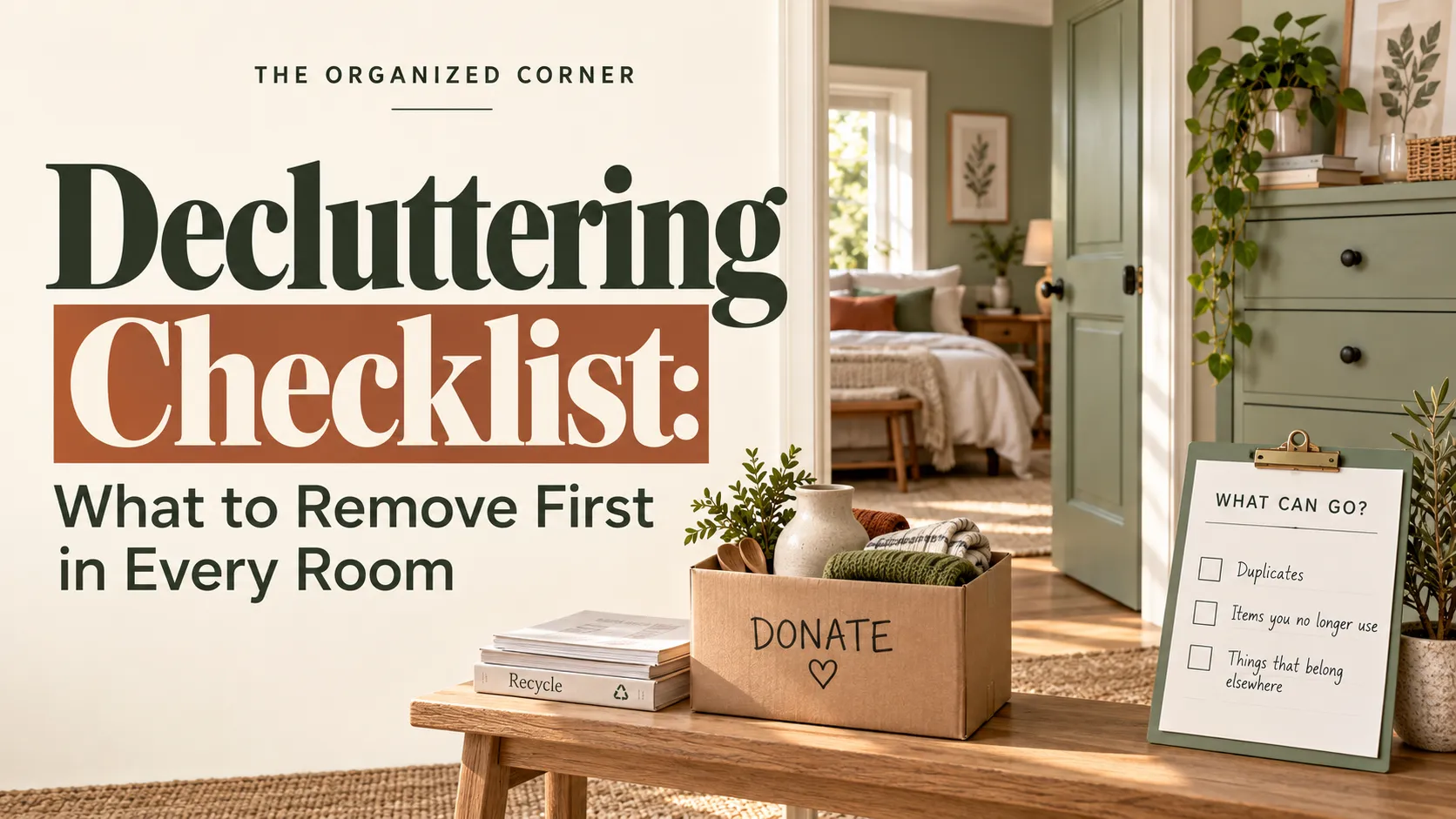
One of the hardest parts of decluttering is deciding where to begin.
You look around a room and see clothing, papers, drawers, shelves, decorations and things that have been sitting there for so long that you barely notice them anymore.
Instead of starting with the most difficult decisions, begin with the easiest clutter.
If you’re wondering what to declutter first, look for things that are clearly broken, duplicated, empty, unused or simply in the wrong room.
Those quick decisions create space before you ever have to think about sentimental belongings or difficult “maybe” items.
What Should You Declutter First?
Start with rubbish, expired products, broken items you won’t repair, unnecessary duplicates, things that belong somewhere else and items you already know you don’t use. These require the least decision-making. Once those easy items are gone, work through your home room by room.
1. What to Declutter First in Any Room
Before thinking room by room, look for these five types of clutter anywhere in the house:
- obvious rubbish or recycling
- broken items you aren’t going to repair
- duplicates you don’t need
- things that belong somewhere else
- items you no longer use
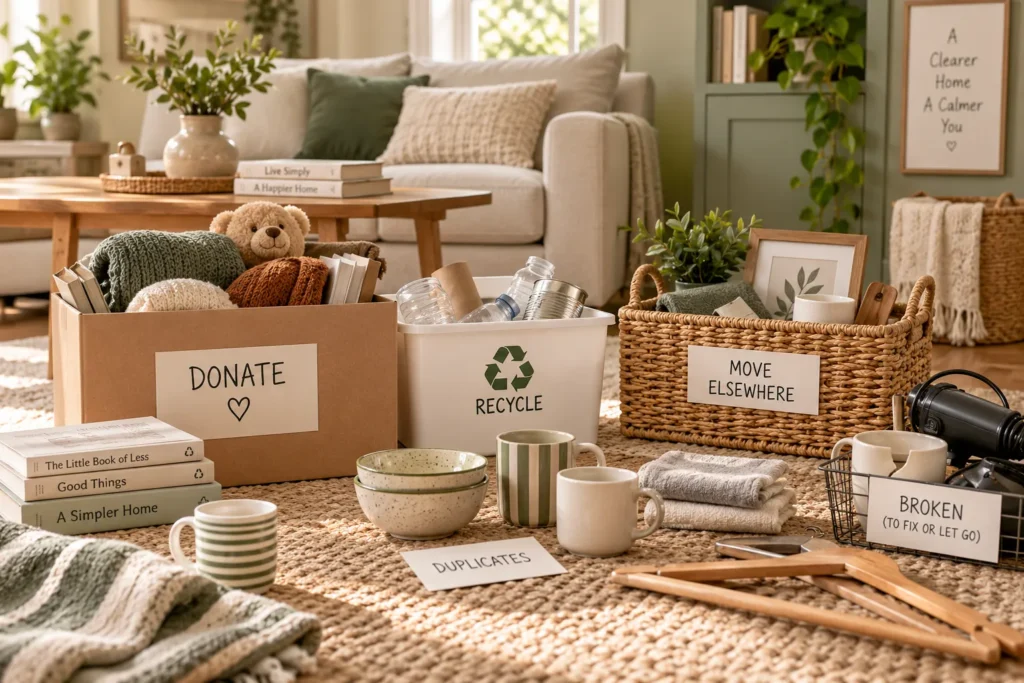
These are usually easier to decide on because you’re not asking yourself whether every possession deserves to stay forever.
You’re simply removing the obvious obstacles first.
If even this feels difficult because the whole house seems overwhelming, start with our guide on how to start decluttering when overwhelmed and work on one small area at a time.
2. Kitchen: Remove What Gets in the Way of Cooking
The kitchen often collects more than food.
Start with:
- expired or unusable pantry items
- containers without matching lids
- duplicate utensils
- damaged kitchen tools
- takeaway containers you never reuse
- appliances you genuinely don’t use
- items that belong in another room
Don’t start buying organizers yet.
First remove what doesn’t need to occupy the space.
Once the unnecessary items are gone, our small kitchen organization ideas can help you decide where the remaining everyday tools should live.
3. Bathroom: Start With Empty and Unused Products
Bathroom clutter is often made up of small things, which makes it easy to underestimate.
Look for:
- empty bottles
- products you stopped using
- dried-up cosmetics
- old samples you’ll never use
- damaged hair accessories
- worn-out sponges or tools
- unnecessary duplicates
For medication or products requiring special disposal, follow the instructions on the packaging or your local disposal guidance rather than automatically placing them in household rubbish.
After removing the obvious clutter, think about what actually needs to stay within easy reach.
Your countertop should primarily hold the products you use regularly.
4. Bedroom: Remove the Things That Don’t Support Rest
Bedrooms can slowly become storage areas for everything that doesn’t have another home.
Start with:
- clothes waiting to be put away
- rubbish and receipts
- empty packaging
- books or objects you’re finished with
- damaged linens
- items that belong elsewhere
- things permanently sitting on the bedside table without being used
Don’t try to redesign the whole room immediately.
First reduce what is competing for the surfaces you use every day.
If everyday objects constantly return to the same piles, our guide on bedroom organization tips explains how giving frequently used clutter a specific home can make the room easier to maintain. Your existing bedroom article specifically focuses on nightstands, dressers and everyday bedroom clutter.
5. Closet: Remove Before You Add More Storage
A packed closet often tempts you to buy another rack, bin or organizer.
Declutter first.
Look for:
- clothing that is damaged beyond repair
- duplicates you never reach for
- items you haven’t used for a long time
- empty boxes and packaging
- things that don’t belong in the closet
- low-use belongings occupying your easiest-to-reach space
You don’t automatically need to remove every rarely worn item.
The first question is whether it deserves prime closet space.
Your existing guide on why your closet always feels full goes deeper into seasonal storage, rarely used clothing, spare bedding and keeping your most accessible areas for everyday items.
6. Living Room: Clear the Things That Drift In
Living rooms often become collection points because everyone uses them.
Look for:
- cups and dishes
- mail and papers
- abandoned toys
- charging cables with no regular home
- old magazines
- broken remotes or accessories
- items that belong in bedrooms, kitchens or offices
Start by removing things that simply don’t belong there.
Then ask whether the remaining objects actually support how you use the room.
A living room doesn’t have to be empty to feel calm.
It just needs fewer things competing for the same surfaces.
7. Entryway: Remove What You Don’t Need on the Way Out
The entrance to your home can become cluttered quickly because it is where things get dropped.
Start with:
- shoes nobody is currently wearing
- empty bags
- old mail
- receipts
- broken umbrellas
- out-of-season accessories
- objects waiting to be taken somewhere else
Keep the entryway focused on what you genuinely need when leaving or arriving home.
Everything else should move to its proper location.
8. Create One Clear Exit for Things Leaving
Decluttering isn’t finished when you put something in a donation box.
It is finished when the item actually leaves the house.
Create clear destinations:
Donate
Move the bag somewhere connected to your next trip out.
Sell
Set a deadline for listing the item.
Recycle
Move it to the appropriate recycling area.
Dispose
Handle it appropriately instead of letting it sit in a “deal with later” pile.
Move elsewhere
Take items to their actual home before ending the decluttering session.
This prevents your decluttering pile from becoming a new form of clutter.
What Should You Declutter First?
Start with the decisions that require the least emotional energy.
Remove rubbish, obvious duplicates and broken items you won’t repair.
Move things that belong somewhere else.
Let go of things you already know you don’t use.
Then move on to the harder decisions.
You don’t need to empty the whole house to make meaningful progress.
One drawer, one surface or one shelf is enough to start.
Frequently Asked Questions
What should I declutter first?
Start with obvious rubbish, broken items, unnecessary duplicates, things that belong somewhere else and items you already know you no longer use.
Which room should I declutter first?
Choose either a small area you can finish quickly or the room that causes the most daily frustration. You don't have to start with the messiest room.
Should I buy storage containers before decluttering?
Usually not. Remove unnecessary items first so you know how much actually needs to be stored before spending money on organizers.
How do I declutter without getting overwhelmed?
Work on one small area such as a drawer, shelf or surface and finish it before moving on. Avoid emptying several rooms at the same time.

Join the conversation.