
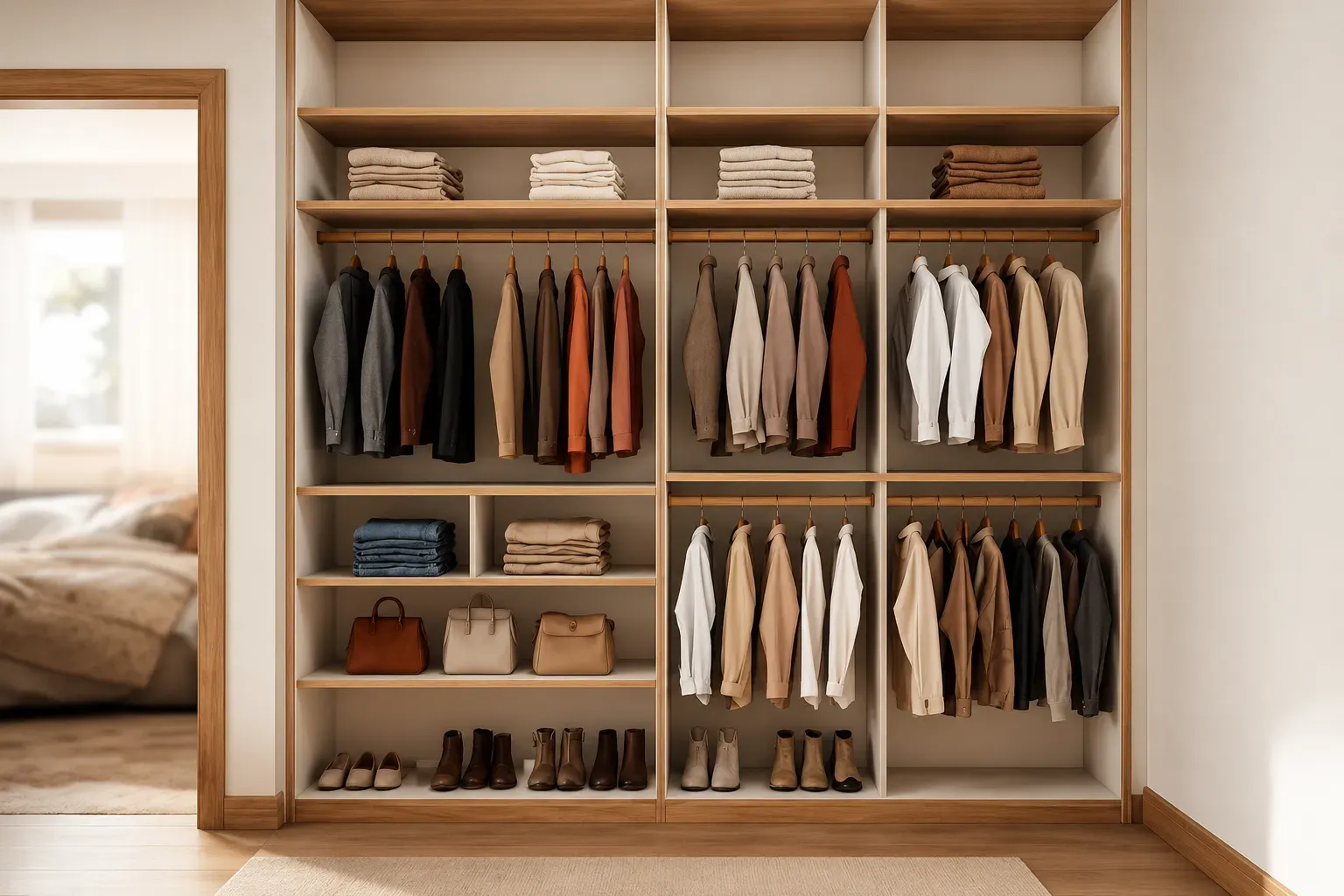
If your closet always feels crowded, messy, or difficult to maintain, you may not need a bigger closet. You may simply need a smarter closet organization system.
One of the easiest ways to improve your storage is to stop thinking only from side to side and start thinking upward.
Vertical closet organization allows you to make better use of the space above clothing, underneath hanging garments, between shelves, and throughout areas that often go unused. By creating multiple storage levels, you can organize clothes, shoes, handbags, accessories, and everyday essentials without taking up additional floor space.
Whether you have a spacious walk-in wardrobe or a small bedroom closet, these closet organization ideas can help you create a space that feels cleaner, more organized, and easier to use.
Why Your Closet May Feel Smaller Than It Really Is
When a closet becomes overcrowded, the natural reaction is usually to look for more horizontal storage.
We add another hanger or squeeze more clothes onto an existing rod.
We buy another storage container.
But there is often an entire dimension of storage being overlooked: height.
Take a look at your closet from floor to ceiling. You may notice empty areas above your clothes, unused shelf space, or large gaps underneath shorter garments.
Instead of asking:
“Where can I fit more things?”
Try asking:
“How can I use the space I already have more efficiently?”
That simple change can make a major difference.
1. Use the Space Above Your Hanging Clothes
One of the easiest closet storage ideas is to make use of the empty space above your clothing.
If your shirts, jackets, or other garments hang well below the ceiling, the area above them could become useful storage.
Depending on your closet layout, you can use this space for:
- Folded sweaters
- Handbags
- Hats
- Seasonal clothing
- Storage baskets
- Extra bedding
- Accessories
- Items you don’t use every day
Keep frequently used belongings at a comfortable height and reserve higher shelves for seasonal or less frequently used items.
This makes your closet more functional without requiring additional floor space.
2. Create Multiple Hanging Levels
Another effective vertical closet organization technique is creating more than one hanging level.
If your wardrobe contains a lot of shorter garments, a double-hanging setup can help you use the same vertical space more efficiently.
For example, one section can be dedicated to shirts and jackets while another level holds additional shorter clothing.
This can be especially useful for:
- Shirts
- Blouses
- Jackets
- Skirts
- Folded pants
- Children’s clothing
Rather than allowing one long hanging area to consume the entire height of your closet, divide the space into practical levels.
3. Make Use of the Space Under Your Clothes
Vertical storage doesn’t only mean going higher.
Don’t forget to look down.
The space underneath shorter hanging clothes can be perfect for shoes, baskets, storage boxes, or other belongings.
Instead of letting shoes collect randomly on the floor, create dedicated zones.
For example:
Everyday shoes → Work shoes → Boots → Occasion shoes
When similar items have a designated location, your closet becomes much easier to maintain.
4. Organize Your Closet Into Zones
A well-organized closet should have a purpose for each area.
Rather than mixing everything together, create simple storage zones.
Upper Storage
Use for seasonal clothing, handbags, hats, and items you don’t frequently need.
Eye-Level Storage
Keep your most frequently worn clothes and everyday essentials here.
Lower Storage
Use for shoes, baskets, and other easy-to-access items.
Small Storage Areas
Dedicate smaller sections to belts, scarves, jewelry, and accessories.
This approach is one of the simplest home organization tips because it gives everything a logical place.
5. Organize Clothes by Category
Once you’ve created your storage zones, group similar clothing together.
You could organize your wardrobe by type:
- Shirts
- Sweaters
- Jackets
- Pants
- Dresses
- Workwear
- Casual clothing
- Seasonal clothing
Another option is organizing clothes by color.
A color-coordinated wardrobe can make it easier to find specific pieces while giving your closet a cleaner appearance.
The best system is the one that works with your lifestyle.
Don’t create a complicated organization system that becomes difficult to maintain.
6. Turn Shelves Into Separate Storage Levels
Open shelves can become much more useful when you divide them into smaller sections.
Instead of placing everything on one large shelf, use shelf organizers, baskets, or stackable storage to create additional levels.
For example:
Top: Seasonal sweaters
Middle: Everyday folded clothes
Lower: Bags and accessories
Bottom: Shoes
This helps prevent different categories from becoming mixed together.
It also makes it easier to see what you already own.
7. Look for Hidden Vertical Storage
When searching for small closet ideas, don’t only focus on your shelves and hanging rods.
Look at every unused vertical surface.
Potential storage areas include:
- The backs of doors
- Empty wall sections
- Space between shelves
- Tall corners
- Areas above existing storage
- Space beneath hanging clothes
Depending on your closet, hooks, narrow shelves, hanging organizers, or baskets can help turn overlooked areas into useful storage.
The key is to maximize the space without making the closet difficult to access.
8. Keep Everyday Items Within Easy Reach
One common mistake with vertical organization is putting everything high up simply because there is space available.
That’s not the goal.
Your closet should be organized around how you actually use it.
Keep everyday clothing and frequently used accessories around eye level.
Place occasionally used items higher.
Store seasonal belongings toward the top.
Think of your closet as a simple accessibility system:
Everyday items → easiest to reach
Occasional items → moderate reach
Seasonal items → higher storage
This makes your organization system much more practical.
9. Don’t Forget Shoes and Accessories
Clothing often gets most of the attention when organizing a closet, but shoes and accessories can quickly create clutter.
Use your vertical space to separate these smaller categories.
You can create dedicated areas for:
- Shoes
- Boots
- Handbags
- Belts
- Scarves
- Hats
- Jewelry
- Everyday accessories
Keeping these items together prevents them from taking over your clothing areas.
It also makes getting ready faster because everything has a designated home.
10. Don’t Fill Every Inch of Your Closet
Once you discover unused storage space, it can be tempting to fill every shelf.
Try not to.
More storage space doesn’t mean you need more belongings.
Leaving some empty space makes it easier to see your clothes and put things away.
If your closet remains overflowing after you’ve reorganized it, consider decluttering.
Ask yourself:
- Do I still wear this?
- Does it still fit?
- Have I worn it recently?
- Would I buy it again today?
- Is it worth taking up valuable closet space?
Sometimes the best organization solution isn’t another storage container.
If deciding what to keep is the part that stops you, our guide on how to start decluttering when overwhelmed shows you how to begin with one small area and work through your belongings without trying to tackle everything at once.
It’s simply having fewer things to organize.
How to Organize a Closet Vertically: A Simple Reset
Ready to reorganize your closet?
Try this simple process.
Step 1: Choose One Area
Don’t try to reorganize your entire closet at once. Start with one section.
Step 2: Look Up
Find unused space above your current shelves or hanging clothes.
Step 3: Look Down
Check the space underneath shorter hanging garments.
Step 4: Create More Levels
Use shelves, baskets, organizers, or additional hanging areas to divide the space vertically.
Step 5: Group Similar Items
Keep clothes, shoes, bags, and accessories in their own zones.
Step 6: Prioritize Everyday Items
Put the things you use most often where they are easiest to reach.
Step 7: Declutter
Remove items you no longer wear or need.
Step 8: Leave Breathing Room
Avoid filling every available space. A little empty room makes your system easier to maintain.
Small Closet? Start With Vertical Storage
If you’re working with a small closet, vertical organization can be particularly helpful.
You may not be able to expand the floor area, but you can often make better use of the height.
Even small changes can help:
- Add a shelf above your hanging rod.
- Use stackable organizers.
- Separate shoes into vertical storage.
- Add baskets to unused shelves.
- Use hooks for accessories.
- Create dedicated zones.
- Move seasonal items higher.
The goal isn’t to cram more belongings into your closet.
It’s to make the space work harder and smarter.
You May Not Need a Bigger Closet
A crowded closet can make you think you need more furniture, more storage, or even a larger room.
But before making a major change, take a closer look at the space you already have.
There may be valuable storage hiding above, below, and between your existing organization.
By thinking vertically, you can create multiple levels for clothing, shoes, bags, accessories, and everyday essentials while keeping everything easier to see and reach.
Sometimes the best closet organization idea isn’t buying more storage.
It’s using your existing storage better.
So the next time your closet feels too small, don’t immediately look sideways.
Look up.
Final Thoughts
A well-organized closet isn’t necessarily the biggest closet.
It’s the closet that makes the best use of its available space.
By using vertical storage, creating dedicated zones, organizing clothes by category, and keeping everyday items within easy reach, you can make your closet feel more functional without expanding it.
Start small. Pick one section, look for unused vertical space, and create a few additional levels.
You may be surprised by how much space you’ve been overlooking.
Stop organizing your closet sideways. Start organizing upward.

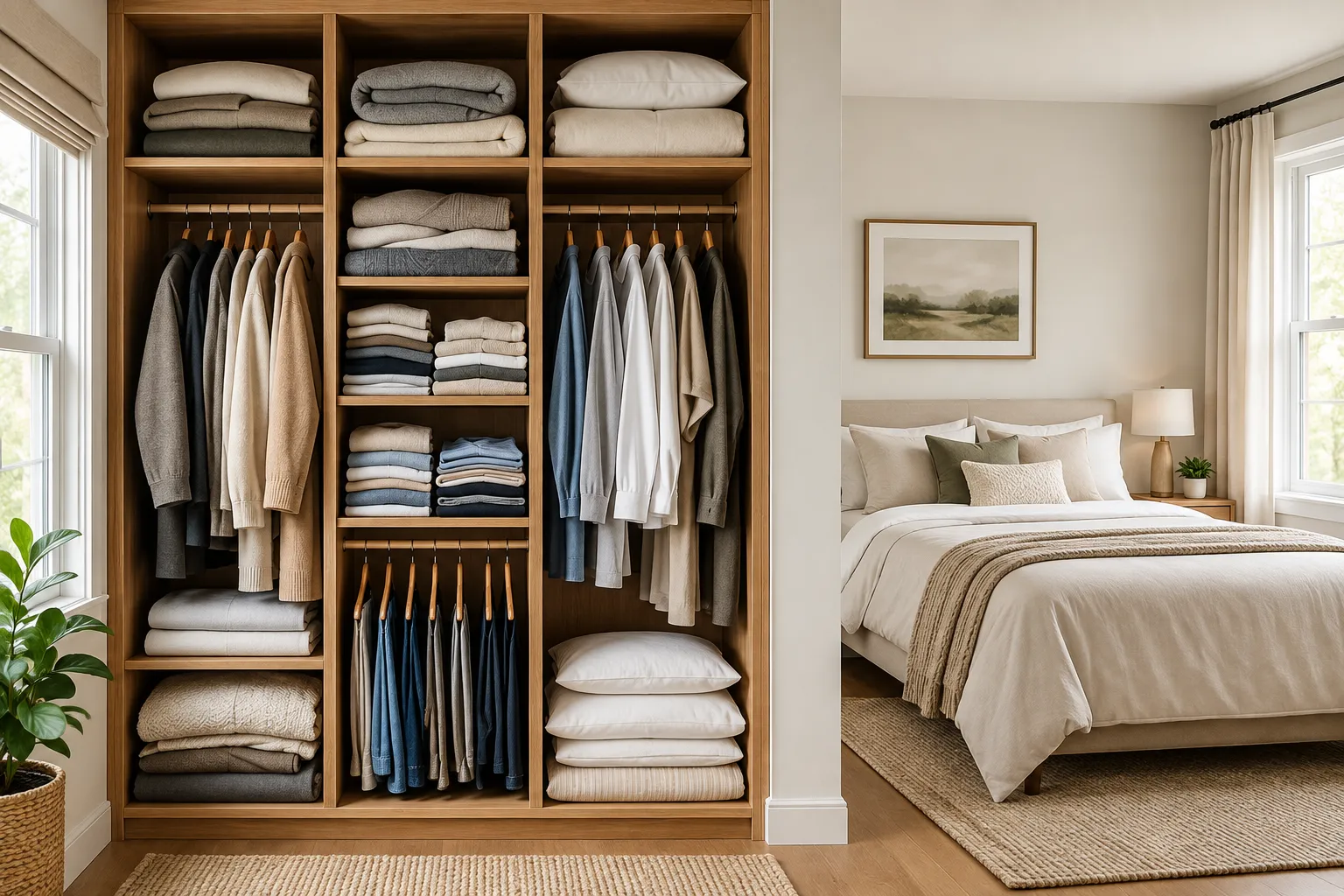
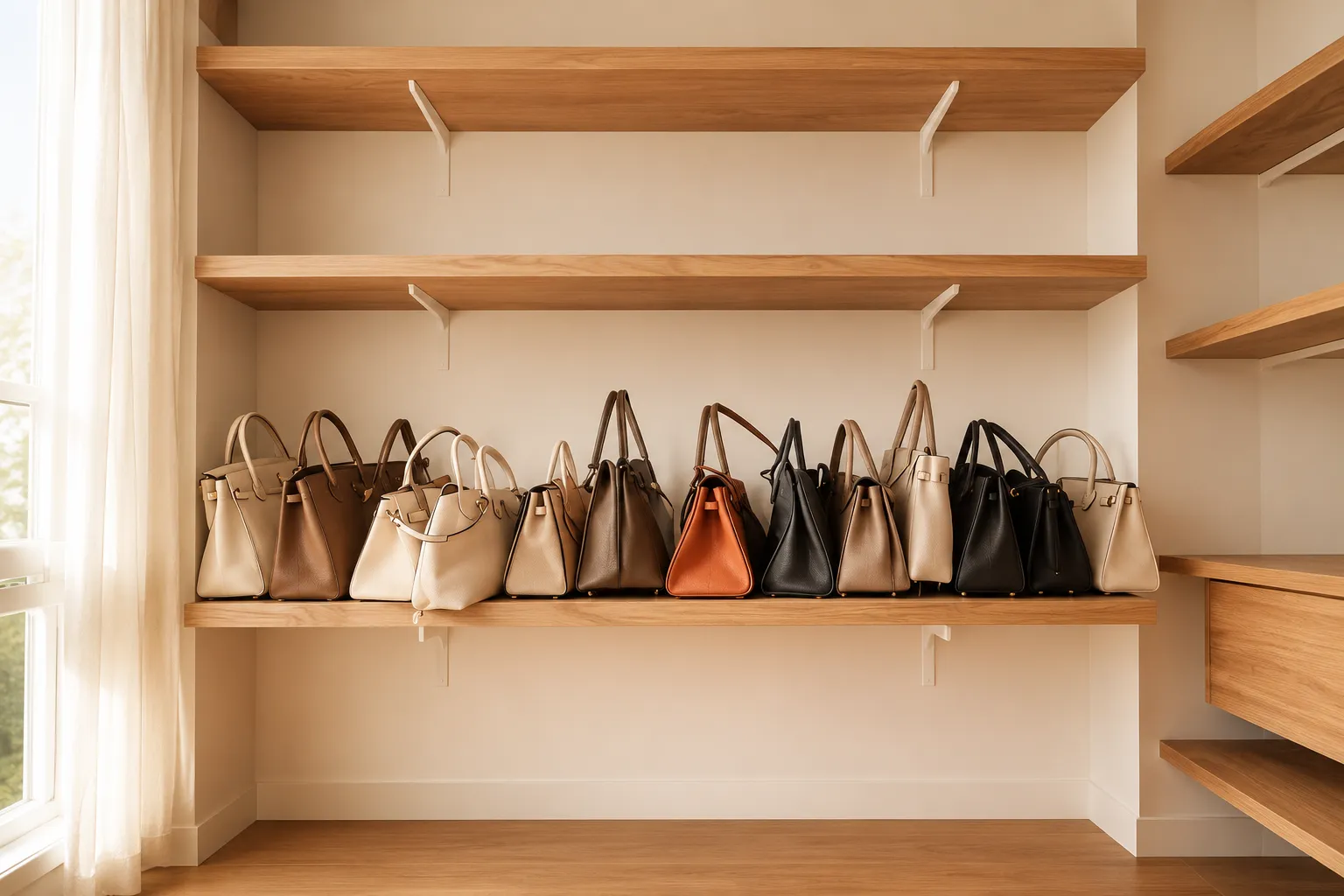
Join the conversation.