
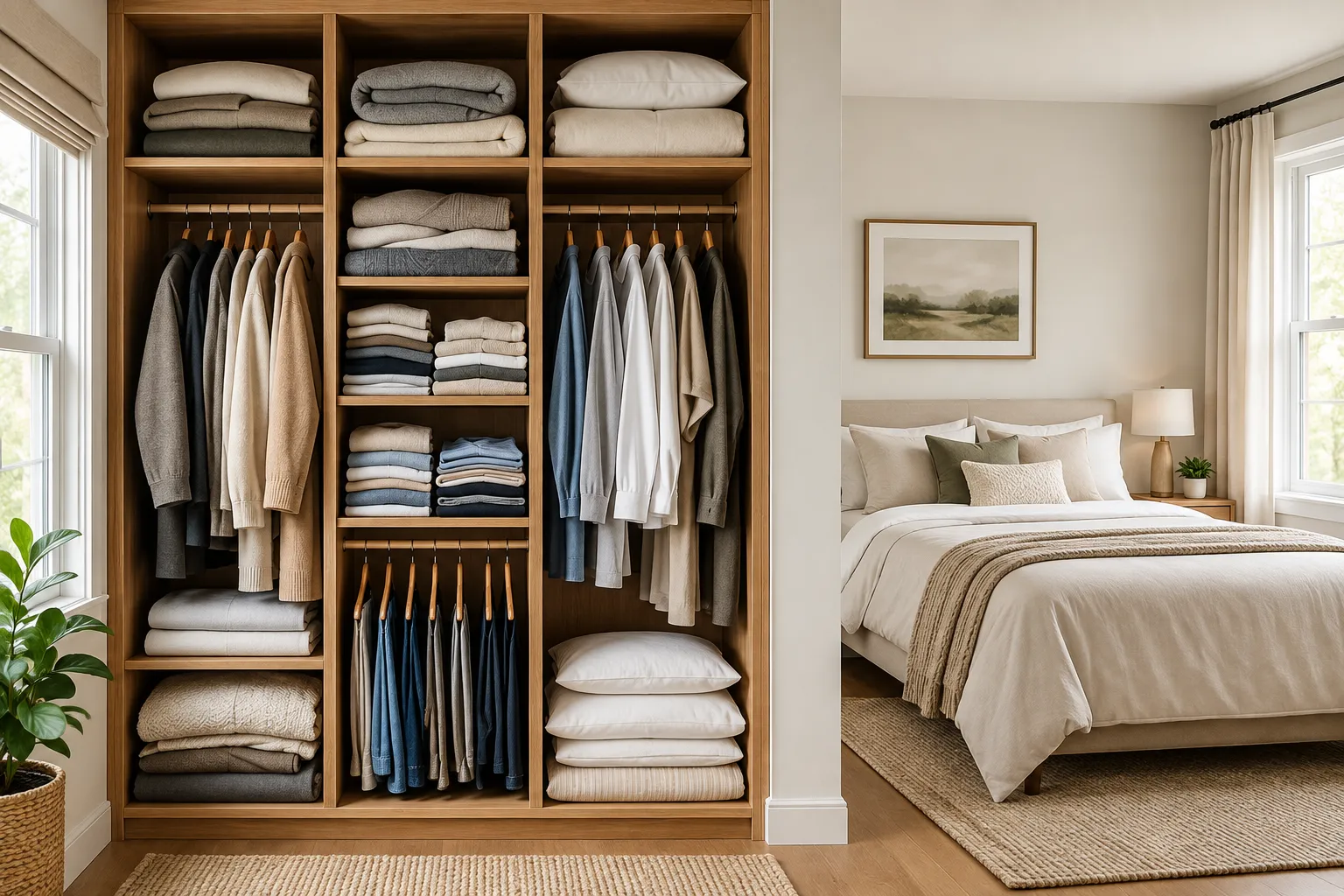
A closet can look perfectly neat and still feel completely full.
Everything may be folded. Clothes may be arranged by color. Shoes may be lined up carefully.
And yet there is still nowhere to put anything.
The problem is not always that you own too much.
Sometimes, the real issue is that low-use items are taking up your most valuable closet space.
Seasonal sweaters, spare blankets, extra pillows, bedding, rarely used handbags, and occasional clothing can easily occupy shelves that would be much more useful for everyday essentials.
A smarter closet organization system starts by deciding what deserves easy access and what can be stored somewhere less convenient.
Why Your Closet Feels Full Even When It Is Organized
A tidy closet and an efficient closet are not necessarily the same thing.
You can fold everything beautifully and still waste a significant amount of storage space.
The issue usually comes down to how often different items are used.
Your most accessible shelves, drawers, and hanging areas should ideally contain the things you reach for most often.
If those spaces are filled with winter blankets in summer, formal clothing you wear twice a year, or extra bedding that rarely leaves the shelf, your everyday clothes are forced into less practical areas.
That makes the closet feel crowded.
Prime Closet Space Should Be for Everyday Items
Think about your closet in terms of convenience.
The areas between roughly waist and eye level are often the easiest to reach.
Those are your prime storage areas.
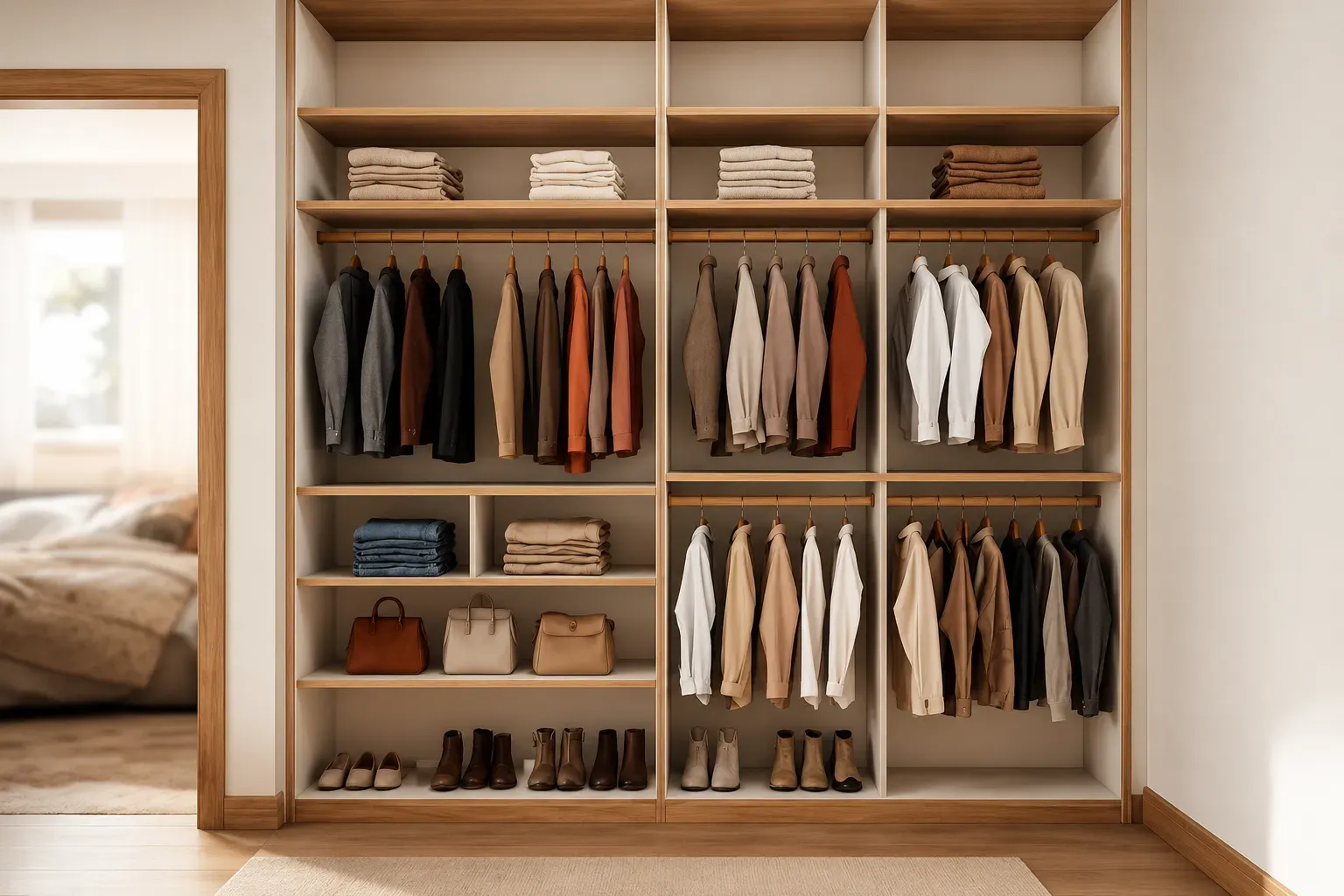
They are better suited for items such as everyday shirts, jeans, sweaters, work clothes, frequently used bags, and other essentials.
Items you rarely use do not necessarily need to occupy those same areas.
Moving low-use belongings to higher shelves, under-bed storage, labeled bins, or another storage area can immediately create more functional space.
Separate Everyday Items From Seasonal Storage
Seasonal clothing is one of the biggest causes of unnecessary closet crowding.
Winter coats, heavy sweaters, scarves, and thermal clothing may remain in the closet throughout summer.
Likewise, lightweight summer clothes may occupy valuable space during colder months.
Instead of keeping everything accessible all year, consider rotating your wardrobe seasonally.
When the season changes, move the clothes you are unlikely to wear for several months into a separate storage area.
This makes your current wardrobe easier to see and easier to use.
Move Extra Bedding Out of Prime Closet Space
Sheets, blankets, comforters, pillows, and spare linens can consume an enormous amount of shelf space.
They are bulky even when neatly folded.
If you only use certain bedding occasionally, storing all of it at eye level may not be the best use of your closet.
High shelves can work well for extra blankets and guest bedding.
Under-bed storage can also be useful for bulky linens that do not need daily access.
The goal is to keep frequently used items convenient while allowing occasional-use belongings to occupy less accessible spaces.
Use High Shelves for Low-Use Items
The top of a closet is often underused.
It may be difficult to reach, but that actually makes it ideal for things you do not need regularly.
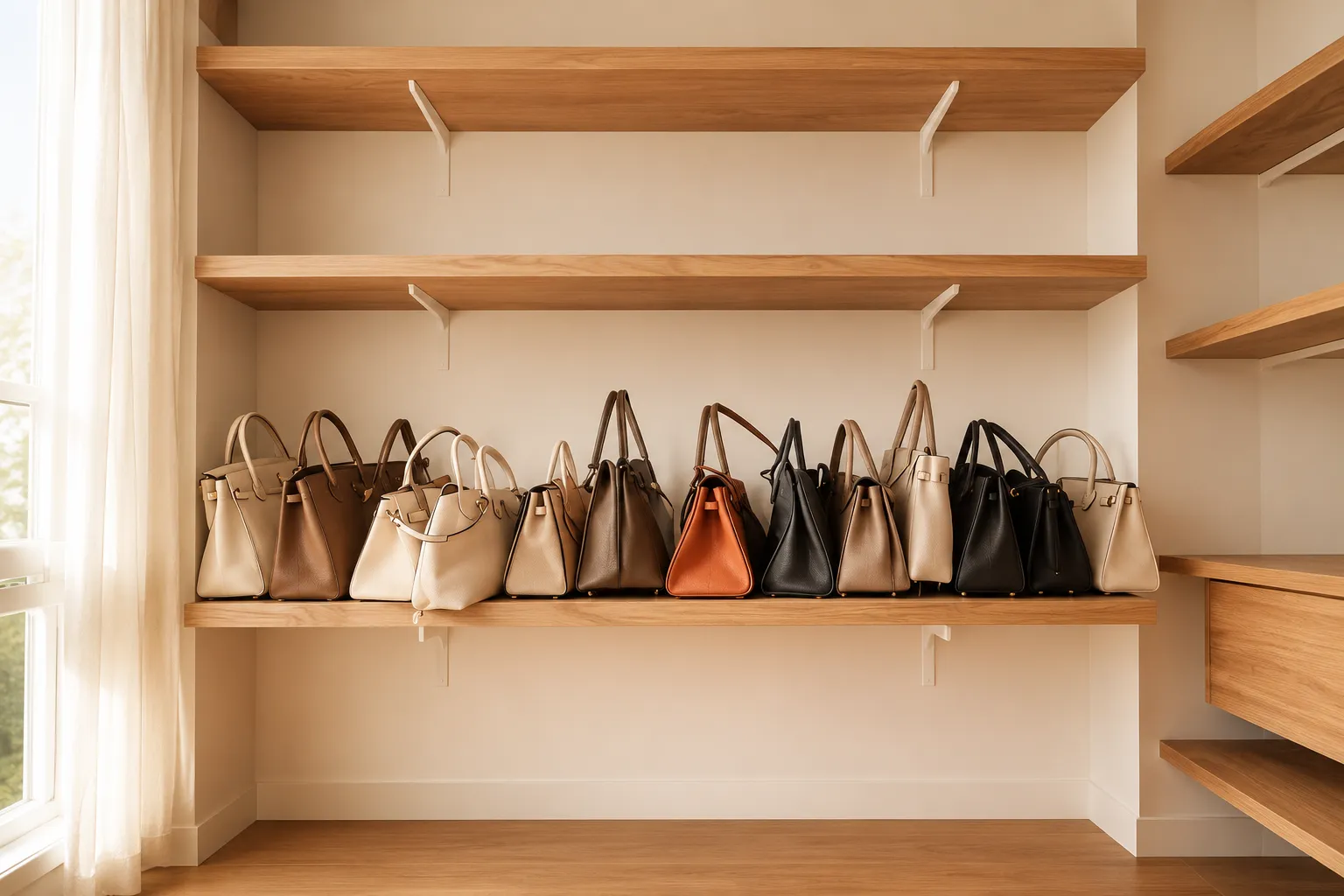
High shelves can be useful for seasonal accessories, spare bedding, travel items, keepsakes, extra handbags, and clothing that is used only occasionally.
Storage bins can help keep these items contained.
Labeling the bins makes it easier to find what you need later without searching through everything.
Look for Hidden Storage Outside the Closet
If your closet is genuinely small, organization alone may not create enough room.
In that case, look for storage areas elsewhere in the bedroom.
The space under a bed is one of the most useful examples.
Low-profile storage containers can hold seasonal clothes, spare bedding, shoes, or other items without taking up additional visible space.
The back of a bedroom door can also be used with hooks or an over-the-door organizer.
Even unused wall space can sometimes provide practical vertical storage.
The goal is to stop expecting one closet to hold absolutely everything.
Stop Using Your Closet as General Storage
Closets often slowly become storage rooms.
At first, they contain clothes and shoes.
Then extra blankets appear, luggage, boxes and then miscellaneous household items.
Eventually, the clothes have to compete with everything else.
If possible, keep bedroom closets focused primarily on clothing, accessories, and bedroom-related items.
Move unrelated belongings elsewhere.
This makes it much easier to maintain a clear organization system.
Organize Clothes Based on How Often You Wear Them
Frequency is one of the easiest ways to decide where something belongs.
Clothing you wear every week deserves the easiest access.
Items you wear occasionally can go slightly higher, lower, or farther back.
Rarely used clothing can be stored in less convenient locations.
This simple approach prevents valuable storage areas from being occupied by things you barely use.
It also makes getting dressed faster because the clothes you actually wear are easier to see.
Declutter Before Buying More Organizers
Storage products can be helpful, but they should not be the first solution.
Adding more boxes, baskets, dividers, and shelves to an overloaded closet can sometimes create even more clutter.
Before buying organizers, remove everything you no longer need.
Look for clothes that no longer fit, damaged items you do not intend to repair, duplicates, and pieces you have not worn for a long time.
Then organize what remains.
If deciding what to remove feels overwhelming, our guide on how to start decluttering when overwhelmed shows you how to begin with just one small area, such as a single closet shelf.
It is much easier to create an effective storage system when you know exactly what needs to fit inside it.
Avoid Overfilling Every Shelf
An organized closet does not need to use every available inch.
Leaving some empty space can actually make the closet easier to use.
When shelves are packed tightly, removing one item can disrupt everything around it.
A little extra room makes folding, retrieving, and returning belongings easier.
It also gives you space for future purchases without immediately creating clutter again.
Use Categories to Keep Everything in Place
Once you have removed low-use items, organize the remaining closet into clear categories.
For example, keep shirts together, jeans together, sweaters together, bags together, and bedding together.
The exact categories depend on your wardrobe.
The important thing is that every type of item has a predictable location.
When you know exactly where something belongs, maintaining organization becomes much easier.
Small Closets Need Better Priorities, Not Just More Storage
When storage is limited, every shelf matters.
A small closet cannot necessarily hold every piece of clothing, every season, every blanket, every suitcase, and every miscellaneous household item at the same time.
That means prioritization becomes important.
Ask yourself:
What do I need access to right now?
That one question can completely change how you organize the space.
Your closet should support your daily routine rather than simply hold as many things as possible.
Store Seasonal Items Somewhere Else When Possible
If you have another storage area available, use it strategically.
Seasonal clothing can sometimes be stored in labeled containers in a spare closet, under the bed, or on high shelving.
Bulky blankets may fit better inside storage bags.
Suitcases can sometimes hold travel-related accessories when they are not being used.
Moving even a small number of bulky, low-use items can free a surprising amount of closet space.
Make Your Closet Easier to Maintain
A complicated organization system is unlikely to last.
The best closet setup should make putting things away almost automatic.
Keep everyday items visible.
Keep categories simple.
Avoid stacking too many things on top of each other.
Give frequently used items enough room.
If your system takes several minutes to maintain every time you put away laundry, it may be too complicated.
Simple systems tend to stay organized longer.
Your Closet May Not Actually Be Too Small
Sometimes a closet really is too small.
But before deciding you need more storage, look carefully at what is currently using the space.
If rarely used bedding, seasonal clothing, spare bags, luggage, and miscellaneous belongings occupy half the closet, you may have more usable space than you think.
Reorganizing based on frequency of use can make the same closet feel significantly larger.
You are not necessarily creating more physical space.
You are making the existing space more useful.
A Better Closet Starts With One Simple Change
You do not need to reorganize your entire bedroom in one day.
Start with one shelf.
Look at everything on it and ask:
How often do I actually use this?
Move rarely used items somewhere less accessible.
Keep everyday items where they are easiest to reach.
Repeat the process shelf by shelf.
That simple habit can transform a closet from a place where everything technically fits into a space that actually works for your daily life.
Frequently Asked Questions About Closet Organization
Why Does My Closet Always Feel Full?
A closet may feel full because bulky, seasonal, or rarely used items are occupying the most accessible storage areas. Moving these items elsewhere can create more useful space for everyday belongings.
What Should Go on the Top Shelf of a Closet?
Top shelves are often best for low-use items such as seasonal clothing, extra bedding, travel accessories, spare bags, or labeled storage bins.
Where Should I Store Seasonal Clothes?
Seasonal clothes can be stored on high shelves, under the bed, in storage bins, or in another available storage area until they are needed again.
Should I Declutter Before Organizing My Closet?
Yes. Removing clothes and belongings you no longer use makes it easier to see how much storage you actually need before buying additional organizers.
How Can I Make a Small Closet Feel Bigger?
Use prime storage areas for everyday items, move seasonal belongings elsewhere, use vertical space, avoid overfilling shelves, and keep items grouped into clear categories.

Join the conversation.