
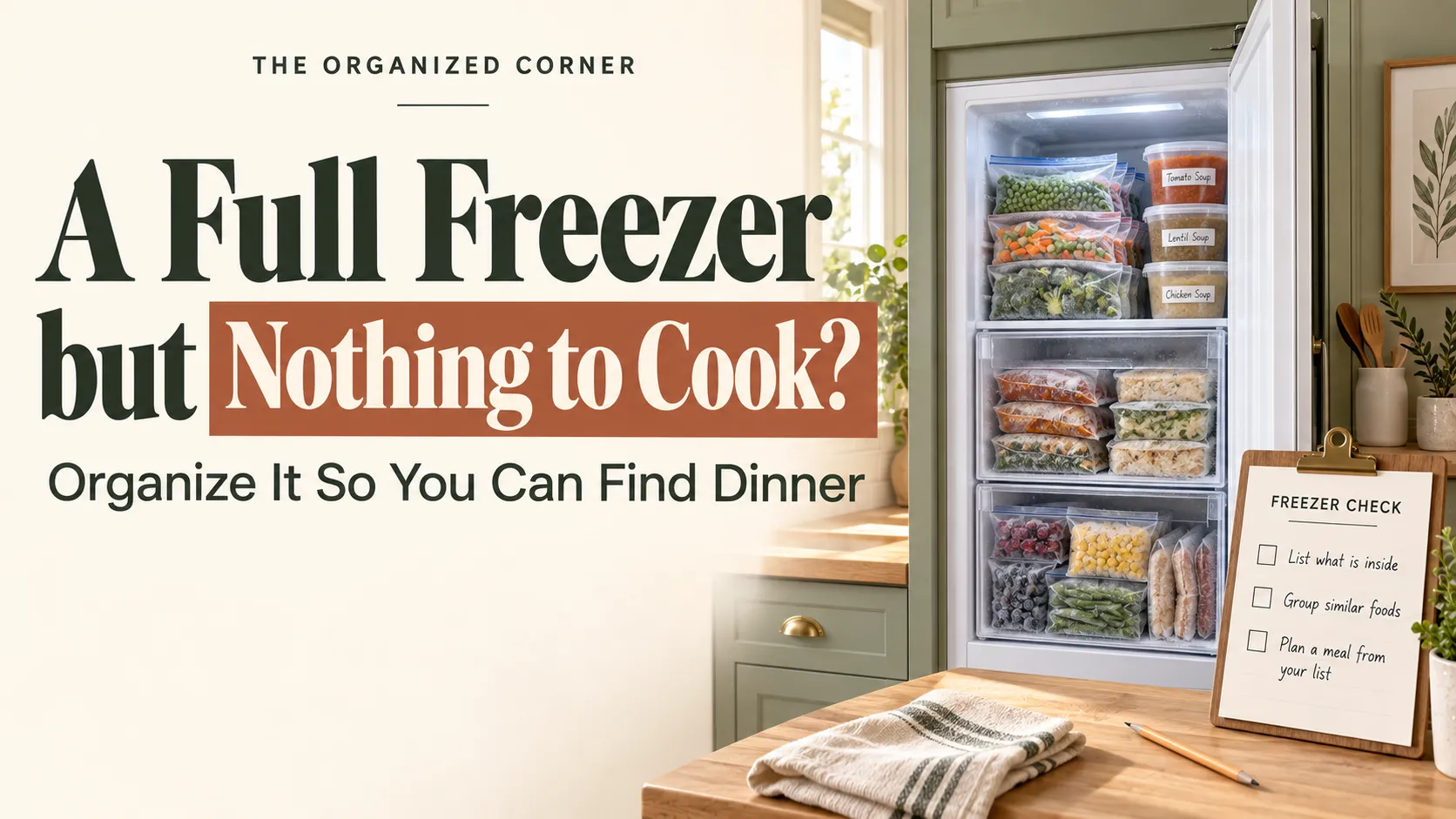
You open the freezer looking for something for dinner.
There are bags stacked behind containers, leftovers you don’t remember freezing, vegetables hidden underneath something else and one mysterious container you’re fairly sure has been there for months.
The freezer is full.
But somehow it still feels like there’s nothing to eat.
The problem often isn’t a lack of food. It’s that you can’t easily see what you already have.
These practical freezer organization ideas can help you make frozen food easier to find, easier to use and much more useful when dinner needs to happen quickly.
How to Organize a Freezer
Start by checking what you already have, removing anything you no longer need, and grouping similar foods together. Give each drawer or shelf a simple purpose, place foods you need to use soon where you can see them, label unfamiliar containers and keep a basic freezer inventory. The goal is not a picture-perfect freezer—it is being able to quickly see what you have, where it is and what to use next.
1. Start Your Freezer Organization With an Inventory
Before reorganizing anything, take a quick inventory.
You don’t need to create a detailed spreadsheet.
Simply look through the freezer and group what you find.
You might discover:
- frozen vegetables
- meat or fish
- bread
- fruit
- leftovers
- prepared meals
- sauces
- baking items
- ingredients bought for a meal you never made
The goal is to stop relying on memory.
Once you know what is actually inside, organizing it becomes much easier.
2. Organize Your Freezer Into Simple Food Zones
A freezer becomes difficult to use when every type of food is mixed together.
Try creating simple zones.
For example:
Vegetables and fruit
Keep frozen produce together.
Proteins
Group meat, fish and other proteins in one area.
Ready-to-eat meals
Keep soups, leftovers and prepared meals together.
Bread and baking
Use one section for bread, pastries and baking ingredients.
Quick dinner ingredients
Keep foods you regularly reach for on busy evenings somewhere easy to access.
You don’t need dozens of categories.
You simply need enough structure that you know where to look first.
3. Put the Food You Need to Use First Where You Can See It
Freezers have a habit of pushing older food further toward the back.
Create a small use-first area for items you want to use soon.
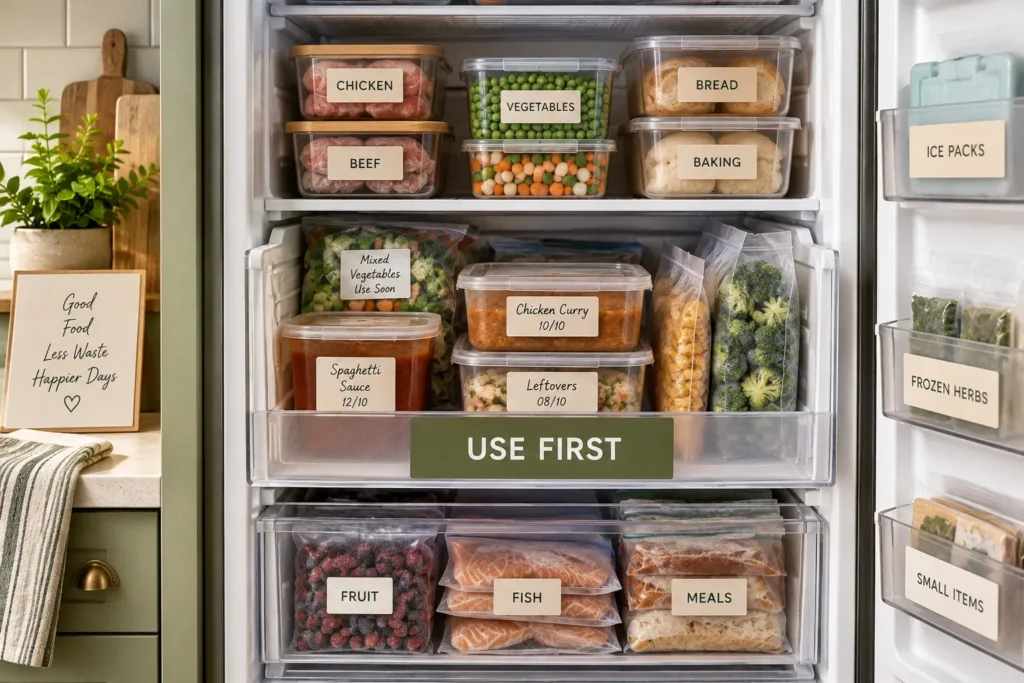
That might include:
- leftovers
- opened bags
- older frozen ingredients
- meals you prepared earlier
- food you keep forgetting about
Place those items somewhere visible rather than burying them under newer groceries.
When planning dinner, check this section first.
It’s a small habit, but it can stop usable food from disappearing into the freezer for months.
4. Label Things You Won’t Recognize Later
You may know exactly what’s in a container when you freeze it.
Three weeks later, it can become much harder to tell.
Simple labels can help.
Write useful information such as:
Tomato soup
Chicken curry
Cooked rice
and whatever date or other information you personally need to identify and manage the food appropriately.
Keep original packaging and manufacturer information whenever it contains important storage, preparation, allergen or safety guidance.
Your labels should help you identify food—not replace information you may need later.
5. Organize Freezer Drawers and Shelves by Purpose
If you have several freezer drawers, shelves or baskets, give each one a purpose.
For example:
Top drawer: ready meals
Middle drawer: vegetables
Bottom drawer: meat and proteins
The exact arrangement doesn’t matter.
Consistency does.
A simple storage-location system also makes an inventory much more useful because you can record not just what you have but where it is.
If you already use a pantry inventory system, extend the same habit to your freezer so both areas are easier to check before shopping.
6. Keep a Simple Freezer Inventory
You don’t need to record every frozen pea.
Focus on the foods that are useful to know about when you’re deciding what to cook.
Your freezer inventory might include:
| Food | Quantity | Location |
|---|---|---|
| Chicken portions | 2 | Bottom drawer |
| Tomato soup | 3 | Top shelf |
| Frozen peas | 1 bag | Vegetable drawer |
| Cooked rice | 2 portions | Meal drawer |
Update the list when something important goes in or gets used.
A simple list that is slightly imperfect is still much more useful than trying to remember everything.
7. Check the Freezer Before Planning Dinner
Your freezer shouldn’t only be checked when you’re already hungry.
Before making your weekly plan, look at what’s available.
If you find:
frozen chicken,
vegetables,
and cooked rice,
you already have most of a meal.
If you find two portions of homemade soup, one evening may already be covered.
This works especially well alongside weekly meal planning, because you can build meals around ingredients you already own instead of starting every week with a completely new shopping list.
8. Avoid Overfilling Your Freezer
Filling every available centimetre may seem efficient, but a freezer that is packed so tightly that you can’t move anything around becomes difficult to use.
Avoid creating stacks that need to be completely dismantled every time you want something from the bottom.
Where practical, use:
- upright bags
- simple baskets
- freezer drawers
- stackable containers that fit properly
The goal isn’t to fit the maximum possible amount inside.
It’s to make the food you have accessible enough that you’ll actually use it.
Make Your Freezer Help With Dinner
A well-organized freezer doesn’t need to look perfect.
It simply needs to answer three questions quickly:
What do I have?
Where is it?
What should I use next?
Group similar foods.
Create a visible use-first area.
Label things you’ll forget.
Give drawers or shelves clear purposes.
Keep a simple inventory.
Then check the freezer before planning meals or shopping.
Your freezer stops being a place where food disappears and starts becoming a useful part of deciding what’s for dinner.
Frequently Asked Questions
What is the best way to organize a freezer?
Group similar foods together, give drawers or shelves clear purposes and keep frequently used or use-first food somewhere easy to see.
How do I keep track of what's in my freezer?
Use a simple freezer inventory showing the food, approximate quantity and where it is stored. Update important items as they are added or used.
Should I use containers or freezer bags?
Use whichever storage method suits the food and your freezer layout. The important part is that items are safely stored, clearly identifiable and easy to access.
How do I stop forgetting food in the freezer?
Create a visible use-first section and check your freezer inventory before meal planning or grocery shopping.

Join the conversation.