
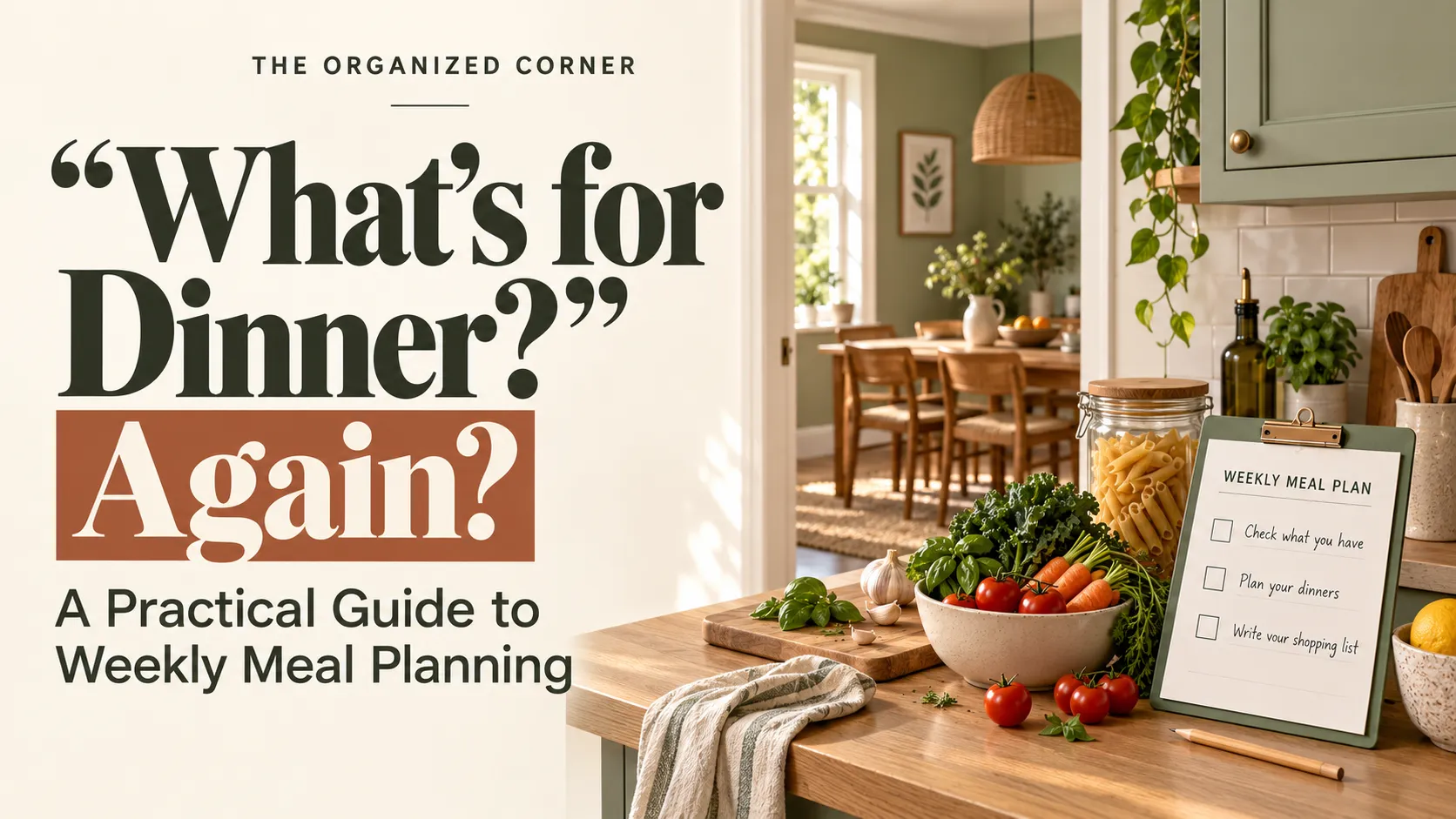
If “What’s for dinner?” becomes a daily question at 5 p.m., the problem usually isn’t that you have no food.
It’s that no decision was made before everyone became hungry.
A little weekly meal planning can take that pressure off without turning your kitchen into a complicated system. You don’t need to plan every breakfast, snack and bite of the week. You simply need enough of a plan to know what meals make sense, what food you already have and what actually needs to go on the shopping list.
Here’s a practical way to do it.
1. Look at Your Week Before Choosing Meals
Start with your schedule, not a recipe website.
Look at the next seven days and identify:
- busy evenings
- nights when someone will be out
- days you’ll have more time to cook
- evenings that need something fast
- meals that may need leftovers
A complicated dinner on your busiest night is unlikely to feel helpful, even if the recipe looks good.
Try matching meals to the amount of time and energy you’re realistically going to have.
2. Check What You Already Have
Before writing a shopping list, look through your:
- fridge
- freezer
- cupboards
- pantry

You may already have pasta, rice, frozen vegetables, meat, sauces or produce that can form the beginning of several meals.
This step helps prevent buying duplicates and gives food you already own a purpose before it gets forgotten.
Ask yourself:
What needs using soon?
Then build one or two meals around those ingredients first.
3. Plan the Meals That Actually Need Planning
You do not have to fill every box on a weekly meal planner.
If breakfast is usually cereal, yoghurt or toast, you may not need to plan it at all.
If lunches are leftovers most days, keep them simple.
Focus on the meals that regularly cause stress—usually dinner.
For example:
Monday: pasta and salad
Tuesday: tacos
Wednesday: leftovers
Thursday: tray-bake chicken and vegetables
Friday: homemade pizza
Saturday: flexible
Sunday: family meal
The plan gives you direction without making the week feel rigid.
4. Keep One or Two Backup Meals
Plans change.
You work late. Someone comes home later than expected. You forget to defrost something. A meal that sounded good on Sunday suddenly feels like too much effort on Thursday.
That’s why a meal plan should include a few easy backups.
Useful backup meals might include:
- eggs and toast
- pasta with a simple sauce
- soup and sandwiches
- frozen portions
- quesadillas
- a quick rice bowl
A backup meal keeps one changed plan from turning into an expensive last-minute takeaway.
5. Build Your Grocery List From the Meal Plan
Once you know what you’re cooking, check each meal against what you already have.
Only add the missing ingredients.
This sounds obvious, but it’s one of the biggest benefits of meal planning.
Instead of walking through the shop thinking:
“What might we eat this week?”
you’re shopping for a specific plan.
You can also group your list into sections such as:
- fruit and vegetables
- proteins
- chilled foods
- pantry staples
- bread
- frozen foods
That makes the shopping trip quicker and reduces forgotten items.
6. Make Meal Prep Small and Useful
Meal prep doesn’t have to mean spending Sunday filling twenty containers.
Instead, ask:
What three small things would make this week easier?
That might be:
- chopping vegetables
- washing salad leaves
- cooking rice ahead
- marinating chicken
- portioning snacks
- defrosting tomorrow’s dinner
Choose prep tasks that actually remove friction from the meals you already planned.
And if preparing meals feels harder because your kitchen itself is difficult to use, these small kitchen organization ideas can help you improve the spaces that make everyday cooking frustrating.
7. Review the Plan Before You Plan Again
At the end of the week, take thirty seconds to notice what worked.
Ask:
- Which meals were easy?
- Which meals were skipped?
- What created too many leftovers?
- What ingredients were wasted?
- Which dinner should become a regular?
You don’t need a completely new meal plan every week.
Keeping a short list of reliable favourites makes future planning much faster.
Weekly Meal Planning Should Reduce Decisions
A useful meal plan isn’t about creating the perfect week.
It’s about removing some of the decisions that usually happen when you’re already tired and hungry.
Check your schedule.
Use what you already have.
Plan the meals that genuinely need planning.
Keep a backup option.
Shop from the plan.
Then make a few small prep decisions that help the week run more smoothly.
That’s enough.
Frequently Asked Questions
How do I start weekly meal planning?
Start by checking your schedule and choosing the dinners that actually need planning. Then look at what food you already have before writing your shopping list.
Do I need to plan every meal for the week?
No. If breakfast and lunch are already predictable, focus mainly on dinner or the meals that regularly cause stress.
How many dinners should I plan each week?
For many households, planning four or five dinners plus leftovers and one flexible night is easier to maintain than planning seven completely different meals.
Does meal planning save money?
It can help by reducing duplicate purchases, giving existing ingredients a purpose and making the grocery list more focused.


Join the conversation.