
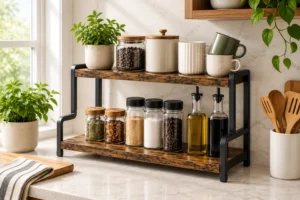
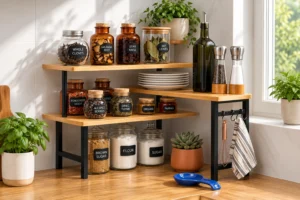

Kitchen counters fill up faster than most of us expect.
A few spice jars become a row of containers. Coffee supplies spread beside the machine. Oils and bottles stay near the stove. Mugs, utensils, and everyday essentials slowly take over the remaining surface.
Before long, the counter is technically organized but still feels crowded.
The solution is not always a larger kitchen.
Sometimes the easiest improvement is to stop using only the horizontal surface and start using the vertical space above it.
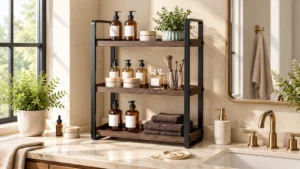
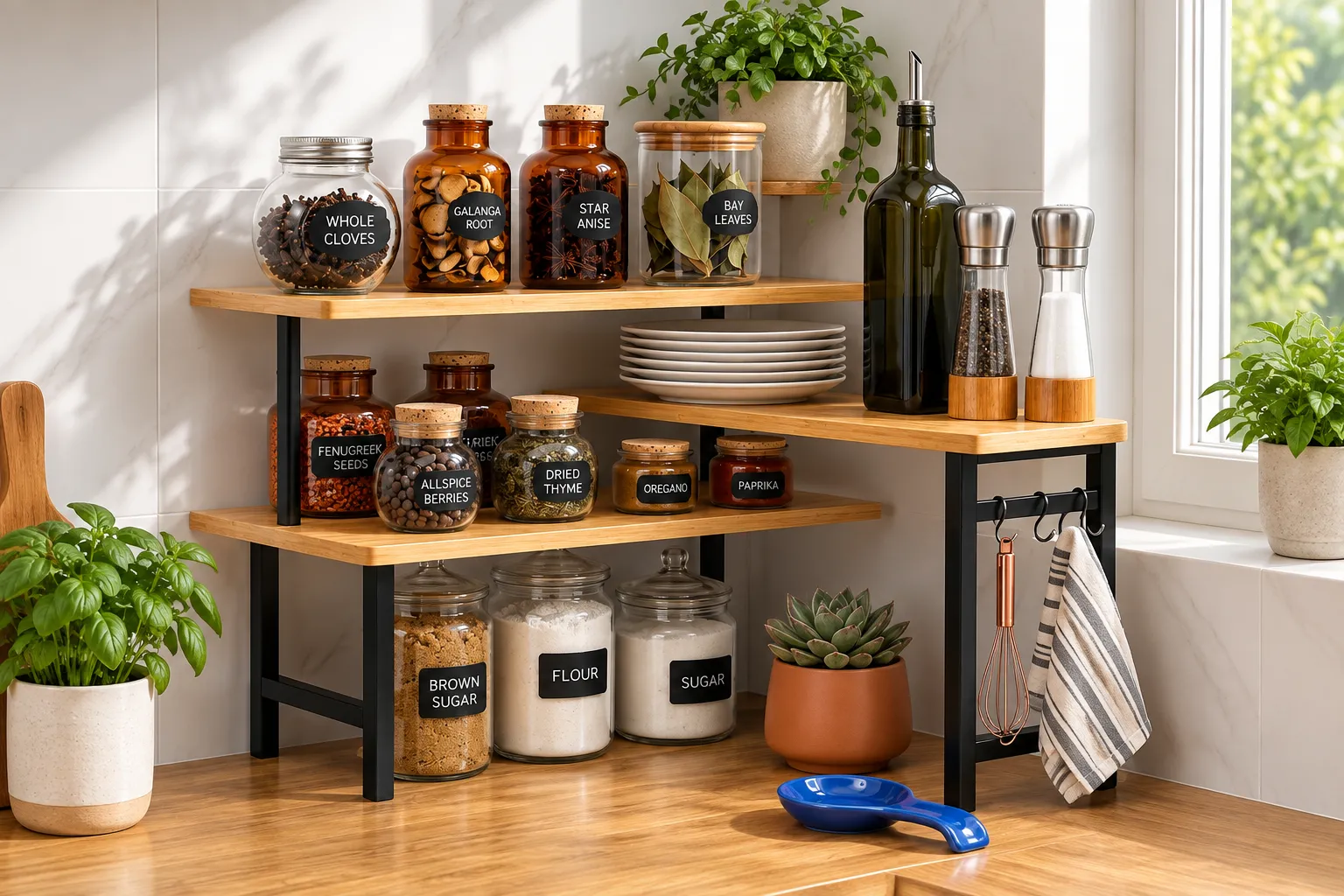
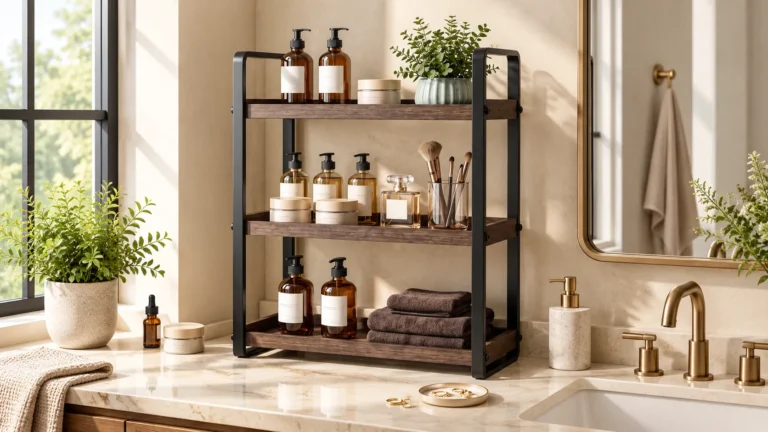
A 3-tier countertop kitchen organizer can create multiple levels of practical storage within a relatively small footprint, helping keep frequently used items visible, grouped together, and easier to reach.
For a small kitchen, pantry, or coffee station, that can make a noticeable difference.
Why Kitchen Countertops Become Cluttered So Quickly
Kitchen counters are convenient.
That is exactly why so many things end up staying on them.
Items you use every day naturally migrate toward the easiest place to reach.
That can include:
- Spices
- Cooking oils
- Salt and pepper
- Coffee supplies
- Tea
- Mugs
- Jars
- Condiments
- Small utensils
- Frequently used ingredients
None of these items necessarily creates much clutter by itself.
The problem appears when every object needs its own section of countertop.
If ten items are sitting side by side, they can occupy a large portion of the usable work surface.
A tiered organizer changes the layout by allowing some of those items to sit above one another instead.
Why Vertical Kitchen Storage Works
Most countertops provide plenty of empty air above them.
That space usually goes unused.
Vertical storage turns some of that empty area into functional storage.
Instead of placing three jars beside each other, for example, you may be able to distribute them across several levels.
This can help keep more of the countertop itself available for cooking and food preparation.
The basic idea is simple:
build upward instead of outward.
That makes vertical storage particularly useful when width is limited.
How a 3-Tier Countertop Organizer Creates More Usable Space
A three-level organizer divides one storage area into multiple layers.
That means different categories can have their own section without spreading across the entire counter.
Depending on how you use your kitchen, the tiers might hold:
- Spice jars
- Cooking oils
- Coffee
- Tea
- Mugs
- Small food containers
- Condiments
- Sugar
- Salt
- Frequently used ingredients
- Small kitchen accessories
The goal is not simply to fit more items into one place.
The goal is to make those items easier to organize.
Keep Everyday Essentials Visible and Easy to Reach
A storage system becomes frustrating if it hides the things you use most.
Countertop organization should do the opposite.
Keep frequently used items in locations that are easy to see and access.
For example, if you cook with the same five spices every evening, those jars can stay toward the front.
Products you use less often can sit on another level or toward the back.
This helps the organizer support your routine rather than making the kitchen more complicated.
Turn It Into a Spice Storage Station
Spice bottles are small, but a collection of them can quickly occupy a lot of countertop space.
A tiered shelf can create a more defined spice station.
Group frequently used seasonings together.
Try arranging taller containers toward the back where labels remain visible.
Smaller containers can stay toward the front.
Keeping spices in one dedicated area also makes it easier to see what you already own before buying duplicates.
Use It as a Coffee Station Organizer
A tiered kitchen organizer can also work well around a coffee station.
Instead of spreading coffee supplies across the counter, group them into one compact zone.
You might organize the tiers like this:
Top Tier
Coffee, tea, or containers you use regularly.
Middle Tier
Mugs, sweeteners, or smaller accessories.
Bottom Tier
Backup supplies or larger containers.
The exact arrangement does not matter as much as keeping related items together.
Organize Oils, Bottles, and Cooking Essentials
Cooking oils and seasonings are convenient to keep near the food preparation area.
But several bottles lined up across the backsplash can create visual clutter.
A countertop organizer can give those bottles one designated home.
Keeping similar items together also makes wiping the counter easier because you can move one organizer instead of moving several individual containers.
A Better Option for Small Kitchens
Small kitchens have less room for inefficient storage.
A large kitchen may have enough counter space to tolerate several scattered categories.
A smaller kitchen does not.
That makes vertical storage particularly valuable in:
- Apartments
- Condos
- Studio kitchens
- Small homes
- Kitchenettes
- Dorm-style kitchens
- RV kitchens
- Coffee corners
When every inch matters, using height can help preserve valuable preparation space.
Use the Organizer in a Pantry
A countertop organizer does not necessarily have to stay on the counter.
If its dimensions work for your pantry, it can also create additional levels inside a shelf.
That can be useful for:
- Canned goods
- Seasonings
- Small jars
- Packets
- Baking ingredients
- Condiments
Tiered storage can prevent small items from disappearing behind taller containers.
Group Similar Items Together
One of the easiest ways to make an organizer look intentional is to use categories.
Avoid turning every level into a random collection of kitchen items.
Instead, group similar products together.
Examples include:
Coffee and tea
Spices and seasonings
Oils and sauces
Mugs and cups
Baking essentials
Breakfast supplies
This makes the setup easier to understand at a glance.
Keep the Most-Used Items in the Best Positions
The easiest locations should go to the items you use most frequently.
There is no benefit in placing a rarely used container at eye level while an everyday spice is difficult to reach.
Think about how you actually cook.
Items used every day should usually stay toward the front and in the easiest-to-access sections.
Occasional items can go higher, lower, or farther back.
Do Not Fill Every Inch of the Organizer
Extra shelving does not mean every shelf needs to be completely full.
An overcrowded organizer can become just as frustrating as an overcrowded counter.
Leave some space between categories.
This makes individual items easier to remove.
It also creates a cleaner visual appearance.
A little empty space can actually make the entire kitchen look more organized.
A Cleaner Counter Can Make the Kitchen Feel Larger
Clutter changes how we perceive a room.
Even a physically spacious kitchen can feel small when every visible surface is covered.
When several individual items are consolidated into one vertical storage zone, more countertop becomes visible.
That open space can make the room feel calmer and less crowded.
The kitchen itself has not become larger.
The layout has simply become more efficient.
Countertop Organization Can Make Cleaning Easier
A crowded counter can be annoying to clean.
Every jar, bottle, and container has to be moved individually before you can properly wipe the surface.
Grouping smaller items on a single organizer can simplify that process.
Instead of moving a dozen objects, you may only need to move the organizer itself.
That can make everyday cleaning quicker.
Choose What Actually Deserves Counter Space
Not everything needs to stay visible.
Counter space should ideally be reserved for things you use regularly.
Before filling your organizer, look at each item and ask:
Do I use this often enough to keep it on the counter?
If not, a cabinet or pantry may be a better place.
This prevents the organizer from becoming a storage area for items you barely use.
Measure Before Buying a Countertop Organizer
Before ordering any organizer, measure the intended area carefully.
Check the available:
- Width
- Depth
- Height
- Cabinet clearance
- Distance from appliances
- Space around electrical outlets
Height is especially important if the organizer will sit beneath upper cabinets.
You should also consider whether tall bottles or jars will fit comfortably on each level.
Always compare your measurements with the current product specifications before ordering.
Think About Where the Organizer Will Sit
An organizer is most useful when placed close to where its contents are used.
For example:
A spice organizer makes sense near the food preparation area.
A coffee organizer belongs near the coffee maker.
Cooking oils may be more convenient near the main preparation area.
The location should support how you actually move through your kitchen.
Use Baskets or Matching Containers for a Cleaner Look
Open shelving can look busy when every product has different packaging.
If appearance matters to you, small baskets or matching containers can create a more consistent look.
You do not need to transfer everything into decorative jars.
Even grouping similar products can improve the visual organization.
Functionality should still come first.
Avoid Blocking Frequently Used Areas
A countertop organizer should create space, not make the kitchen harder to use.
Do not position it where it blocks:
- Cabinet doors
- Drawers
- Electrical outlets
- Appliance vents
- Frequently used preparation areas
Before deciding on a permanent location, try the organizer in the space and make sure normal kitchen tasks remain comfortable.
Is a 3-Tier Countertop Organizer Worth It?
For someone dealing with a crowded kitchen counter, a tiered organizer can be a useful storage upgrade.
Its main advantage is straightforward:
multiple levels of storage within one compact area.
That makes it especially useful for small kitchens or households where frequently used products need to remain accessible.
The organizer linked with this idea is designed around three tiers, giving you several levels for jars, spices, bottles, mugs, and other everyday kitchen essentials.
Whether it is right for your kitchen depends on the available space and what you intend to store.
Small Kitchen Organization Starts With Better Use of Space
Kitchen organization does not always require a renovation.
You may not need another cabinet.
You may not need a larger island.
You may not even need to remove everything from the counter.
Sometimes, reorganizing the same items vertically is enough to make the space significantly more functional.
Start with the section of your counter that feels most crowded.
Remove anything you rarely use.
Group related items.
Then use vertical storage for the essentials you want to keep accessible.
A few small changes can make a kitchen feel cleaner, calmer, and easier to use.
Frequently Asked Questions About Countertop Organizers
Are 3-Tier Countertop Organizers Good for Small Kitchens?
They can be useful because multiple storage levels allow several items to share a relatively small countertop footprint.
What Can I Put on a Countertop Kitchen Organizer?
Depending on the organizer’s dimensions and capacity, it may be useful for spices, jars, mugs, bottles, coffee supplies, condiments, and other frequently used kitchen essentials.
Can I Use a Countertop Organizer in a Pantry?
Yes, if the dimensions fit your pantry shelving. Tiered organizers can help make smaller jars, seasonings, and containers easier to see.
How Do I Make My Kitchen Counters Look Less Cluttered?
Remove rarely used items, group similar products together, use vertical storage, avoid overcrowding organizers, and preserve some open counter space.
Is Vertical Storage Better for Small Kitchens?
Vertical storage can be especially helpful in small kitchens because it uses available height rather than requiring additional countertop or floor width.
Should I Measure My Counter Before Buying an Organizer?
Yes. Measure the width, depth, height, and cabinet clearance of the intended location before ordering.
Join the conversation.